
Friday, March 28, 2014

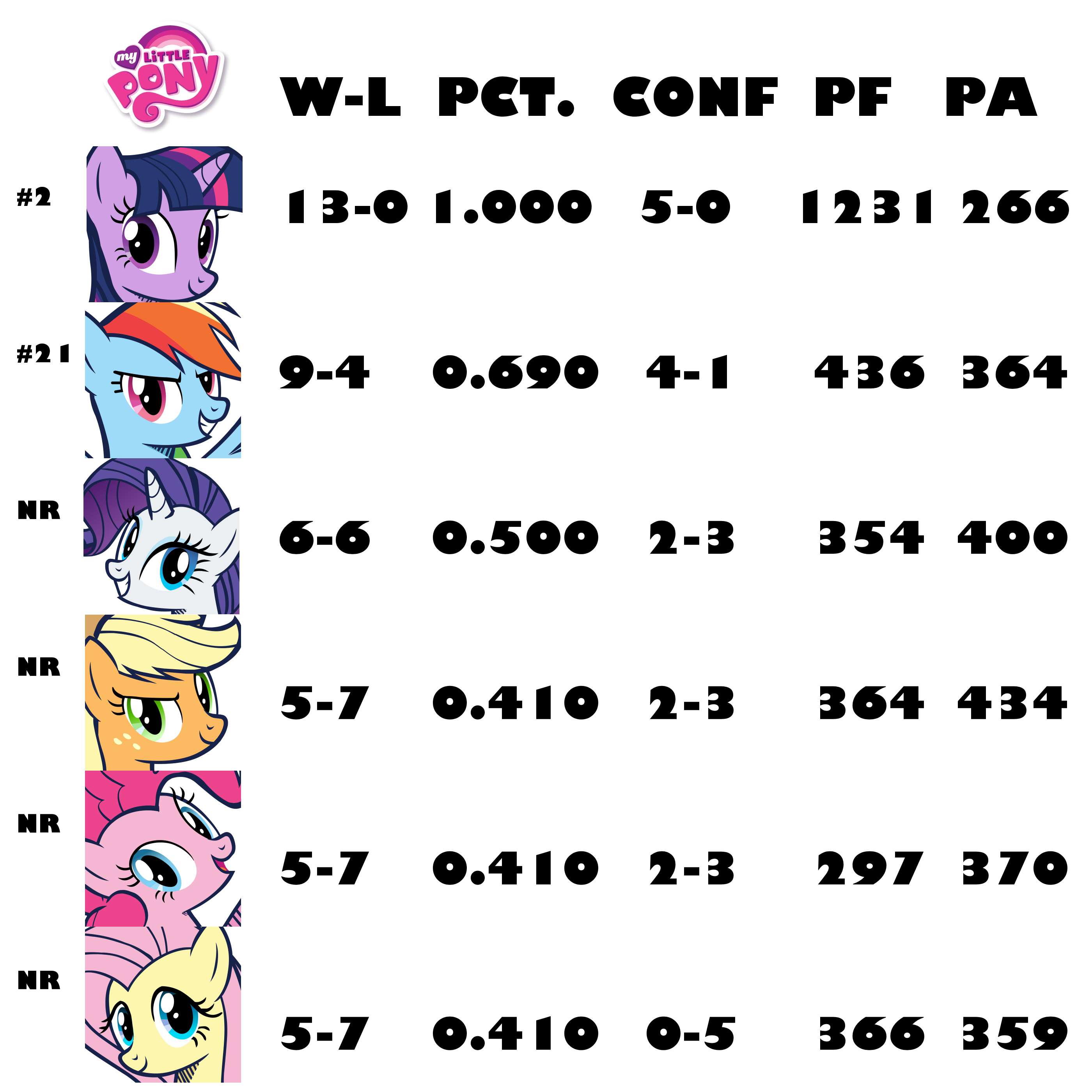
Bowl Season 2021 Results

Bowl Season, 2021 Scores...
BCS National Championship Game
Twilight Sparkle 108, Oklahoma 14
Royal Purple Las Vegas Bowl
Rainbow Dash 38, Arizona 21
Thursday, March 27, 2014
The Mystique of Hipódromo Camarero
The Mystique of Hipódromo Camarero
By Hearst Schlitz III
The Ponyville Express
December 20, 2021
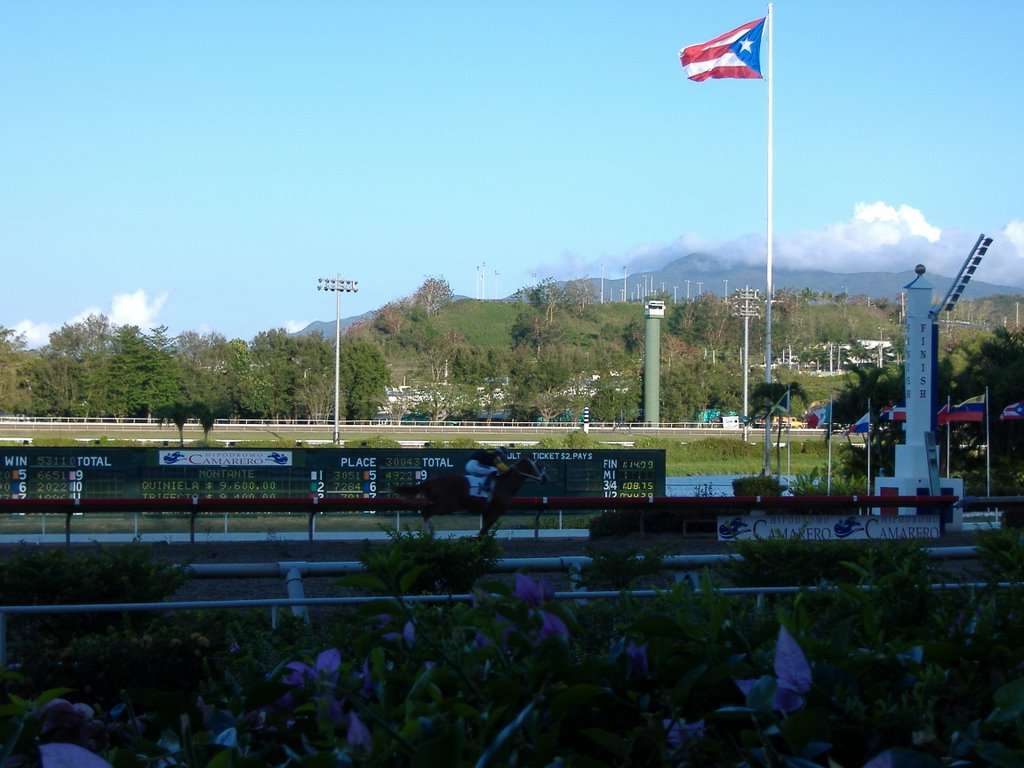
Hipódromo Camarero, formerly known as El Nuevo Comandante, is a horse racing building located in Canóvanas, Puerto Rico, to the east of San Juan and Carolina. It is about a fifteen-minute drive from Carolina's Luis Muñoz Marín International Airport, and 25 minutes east from the Isla Verde hotel area.
El Nuevo Comandante was built in 1976,and opened on October 31, 1976, to substitute the original "El Comandante" building, which had been located in Carolina, from January 1957 to mid October 1976. It has become arguably the most important horse racing complex in the island, holding horse races every Monday, Wednesday, Friday, Saturday and Sunday.
El Nuevo Comandante features a betting window, in which players can try their luck at different games, such as "El Pool Pote" and others. The top award a player can win at El Nuevo Comandante is the "Pool Pote" (Pool Pot) and it reached a staggering 12 Million dollars and has been the largest pot ever won in Puerto Rico's Horse Racing Industry. In addition to the betting windows at El Nuevo Comandante, the Industry has a link of betting agencies throughout Puerto Rico. These are called "agencias hipicas", and people can go there to place bets as well and enjoy local refreshments and snacks.
Races at "El Nuevo Comandante" have been shown on local television and Les Oraliens on radio since the building was inaugurated. Some of the most famous television sportscasters in Puerto Rican history have commented from there, including Norman H. Davila and Manolo Rivera Morales.
Some famous jockeys have run there too, including Hall of Famer Angel Cordero, John Velazquez and J.A. Garcia.
Famous horses imported to run at El Nuevo Comandante have been: Kentucky Derby and Belmont Stakes winner Bold Forbes, Santa Anita Derby winner Mister Frisky, Bandit Bomber, Dawn Glory (Stakes winner in USA).
Among the native horses: Hurly Road (Triple Crown winner), Ribot's Verset (one of the best sires in Puerto Rican history), My favorite Place (Multiple allowance winner in California) Capa Prieto (undefeated for years), Camarero (Holds a record of 56 consecutive races won in a row), Vuelve Candy B. (Triple Crown winner and first horse to earn a million dollars in Puerto Rico, Verset Dancer (Caribbean Derby winner and winner in USA) and Verset's Jet (son of Verset Dancer) and winner of Caribbean Derby and Confraternidad stakes-First horse to do so; among others.
El Nuevo Comandante also has the infamous distinction (Guinness record) of having the horse with the most consecutive losses (Dona Chepa) with 134 consecutive loses (through 11/2/08 without a win!
El Nuevo Comandante is also the site where the most famous race in the Caribbean has been held for 32 years: The Clasico del Caribe is celebrated there yearly, with horses participating from Colombia, Venezuela, Dominican Republic, Mexico, Panama, Trinidad and Tobago, Jamaica and Puerto Rico, among other countries.
Week 15 and 16 2021 Results

Week 15 Scores...
Twilight Sparkle 70, Rarity 7
Pinkie Pie 29, Fluttershy 17
Rainbow Dash 35, Applejack State 30
Week 16 Scores...
No Scores
The Mystique of Seoul Race Park

The Mystique of Seoul Race Park
By Hearst Schlitz III
The Ponyville Express
December 1, 2021
Seoul Race Park is a 40,000 capacity Korean thoroughbred racetrack in Gwacheon, Gyeonggi-do, South Korea. It is host to many of Korea's most valuable thoroughbred horse races including the Korean Derby and Grand Prix. Seoul Race Park is located next to Seoul Racecourse Park Station on Line 4 of the Seoul Metropolitan Subway. It is operated by the Korea Racing Authority (KRA).
The current site at Gwacheon is the third home of Seoul Race Park. The first was at a track in Sinseol-dong, Dongdaemun-gu, which was in operation from the early 1920s until just after the Korean War. Following the closure of the Sinseol-dong track, a new racetrack was constructed at Ttukseom, on the north bank of the Han River In February 1983, after South Korea was awarded the 1988 Summer Olympics, the KRA was given the task of organising the equestrian events. The Ttukseom Racetrack was inadequate; the KRA acquired a new site south of Seoul in Gwacheon Gyeonggi-do, where the equestrian (except the individual-jumping final) and the riding portion of the modern pentathlon events were held. After the Olympics, the KRA turned the site into a racetrack.
The first race at the new Seoul Race Park was held on September 1, 1989. The track can accommodate more than 80,000 spectators; in 2003 a second grandstand, "Luckyville", was opened alongside the existing "Happyville". Races are run on an oval artificial sand-based track with a two-furlong home straight.
As of 2011 live thoroughbred racing takes place on Saturdays and Sundays all year, with 12 races each Saturday and 11 each Sunday. On race day, races are also simulcast from the pony-racing track on Jeju Island and the thoroughbred track at Busan-Gyeongnam. Major races at the Seoul Race Park include the Korean Derby in May, the Minister of Agriculture Cup in October, the President's Cup in November and the season-ending Grand Prix in December.
In 2007, the Korean-bred J.S. Hold won the Korean Triple Crown (the Ttukseom Cup, the Korean Derby and the Minister's Cup) at Seoul Race Park. In 2008 the Ttukseom Cup was replaced as the first leg of the Triple Crown by the KRA Cup Mile, which is run at Busan-Gyeongnam Race Park on the first Sunday in April.
In 2009 the champion jockey at Seoul Race Park was Park Tae Jong, who also holds the record for most wins in Korean racing history. The 2009 Korean Derby was won by a filly, Sangseung Ilro, who had previously won the KRA up Mile at Busan-Gyeongnam. At the end of each season, racing fans in Korea can vote for which horses they wish to take part in the traditional season-ending Grand Prix race. In 2009, the American-bred Dongbanui Gangja won the race for the second consecutive year.
Week 14 2021 Results

Week 14 Scores...
Twilight Sparkle 77, Applejack State 7
Fluttershy 45, Eastern Washington 14
Maine 24, Pinkie Pie 21
Rainbow Dash 29, Rarity 21
The Mystique of Chukyo Racecourse
The Mystique of Chukyo Racecourse
By Hearst Schlitz III
The Ponyville Express
November 24, 2021
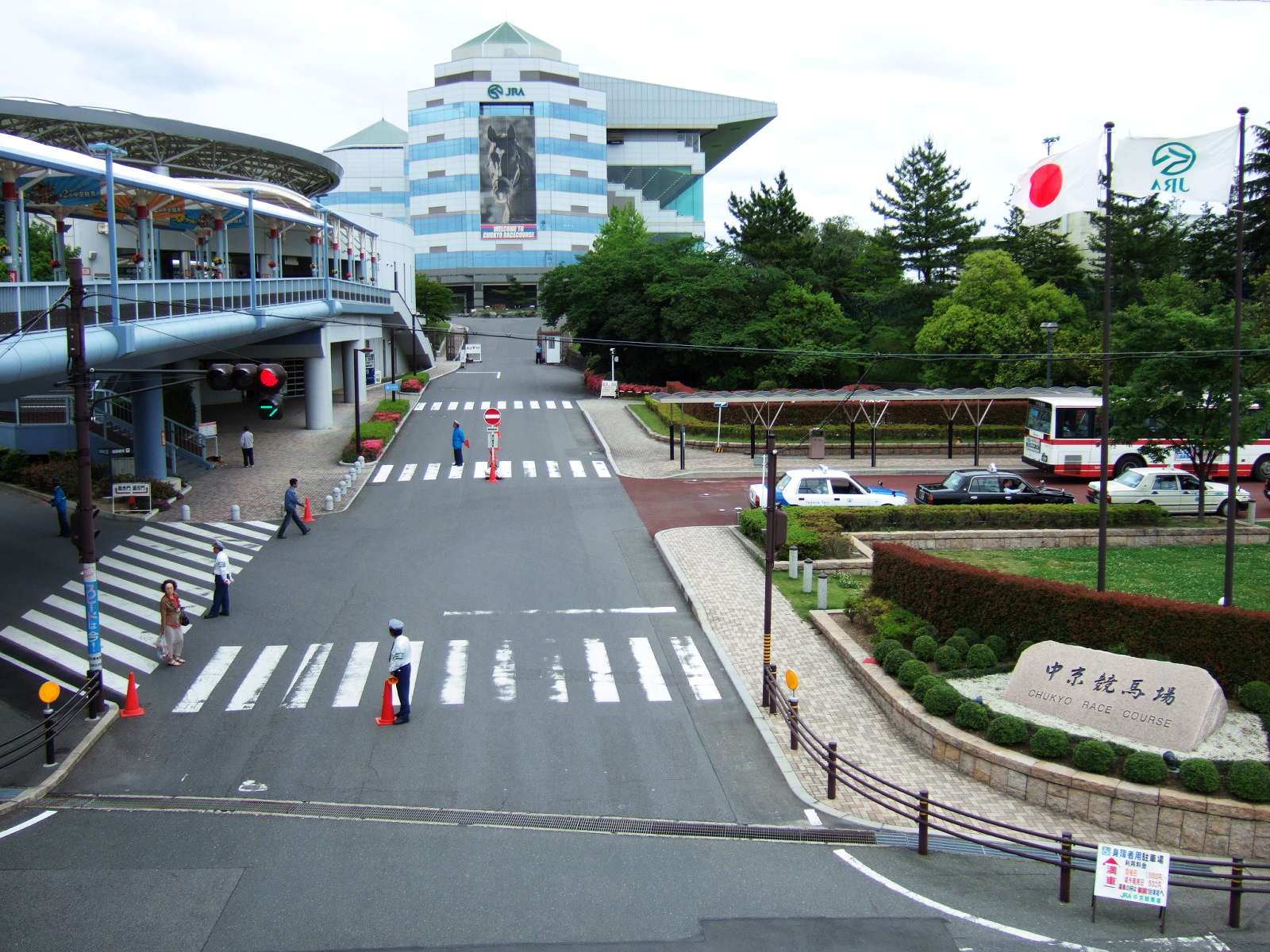
Chukyo Racecourse (中京競馬場 Chūkyō-keibajō) is located in Toyoake, Aichi, Japan. It is used for horse racing. It was built in 1994. It has a capacity of 58,400. It has 8,795 seats.
Chukyo Racecourse has a grass courses, a dirt course, and a jump course. The turf's measures 1600m (7/8 mile + 629 feet). Races can be run on the "A Course" rail setting (on the hedge), the "B Course" setting (rail out 3 meters), or the "C Course" setting (rail out 7 meters). 1000m, 1200m, 1700m, 1800m, 2000m, 2500m and 2800m races run on the oval. The dirt course measures 1418 meters (7/8 mile + 278 feet). 1000m, 1600m, 1700m, 2300m races run on the oval.
The Champions Cup (JPN G-1, formerly the Japan Cup Dirt until 2013) is a thoroughbred horse race contested in Japan in early December. It is run for three-year-olds and older at a distance of 1,800 meters. In recent years, the race has followed the Japan Cup on the Japanese racing calendar.
The Japan Cup Dirt was moved to Chukyo Racecourse in 2014 and be renamed the Champions Cup. According to the Japan Racing Association, the decision to make changes to the race was because of a lack of international participation. The new Champions Cup race will be run left-handed, as opposed to the right turns run since the race moved from Tokyo to Hanshin in 2008. The purse of the race will be reduced to ¥94 million - compared to ¥130 million for the 2013 running - and it will no longer be an invitational race.
The Takamatsunomiya Kinen (高松宮記念) is a Grade 1 flat horse race in Japan for four-year-old and above thoroughbreds. It is run over a distance of 1,200 metres (approximately 6 furlongs) at Chukyo Racecourse in late March.
The forerunner of this race was the Chukyo Daishoten (中京大賞典). It was started as the Takamatsunomiya Hai (高松宮杯) when the victory cup was designed by Prince Takamatsu in 1971, and was given Domestic Grade 2 status when race grading was introduced to Japan in 1984. It was run over a distance of 2,000 metres. This was shortened to 1,200 metres and elevated to Domestic Grade 1 in 1996, and to its present level in 2006. Horses trained outside Japan have been eligible to run in the race since 2001. It was renamed the Takamatsumiya Kinen in 1998 because the family of Prince Takamatsu stopped deigning the victory cup.
From 2011 The Takamatsunomiya Kinen has taken over from the Centaur Stakes as a Japanese leg of the Global Sprint Challenge Series it is the second leg of the series preceded by the Lightning Stakes and from 2012 followed by the Dubai Golden Shaheen. It is also the only JRA Grade 1 race not venued in their 4 major racecourses (Hanshin, Kyoto, Nakayama, Tokyo).
Week 13 2021 Results

Week 13 Scores...
Twilight Sparkle 55, Rainbow Dash 7
Pinkie Pie 31. Portland State 0
Rarity 45, Applejack State 17
Fluttershy 31, South Dakota 10
The Mystique of Kyoto Racecourse
The Mystique of Kyoto Racecourse
By Hearst Schlitz III
The Ponyville Express
November 17, 2021
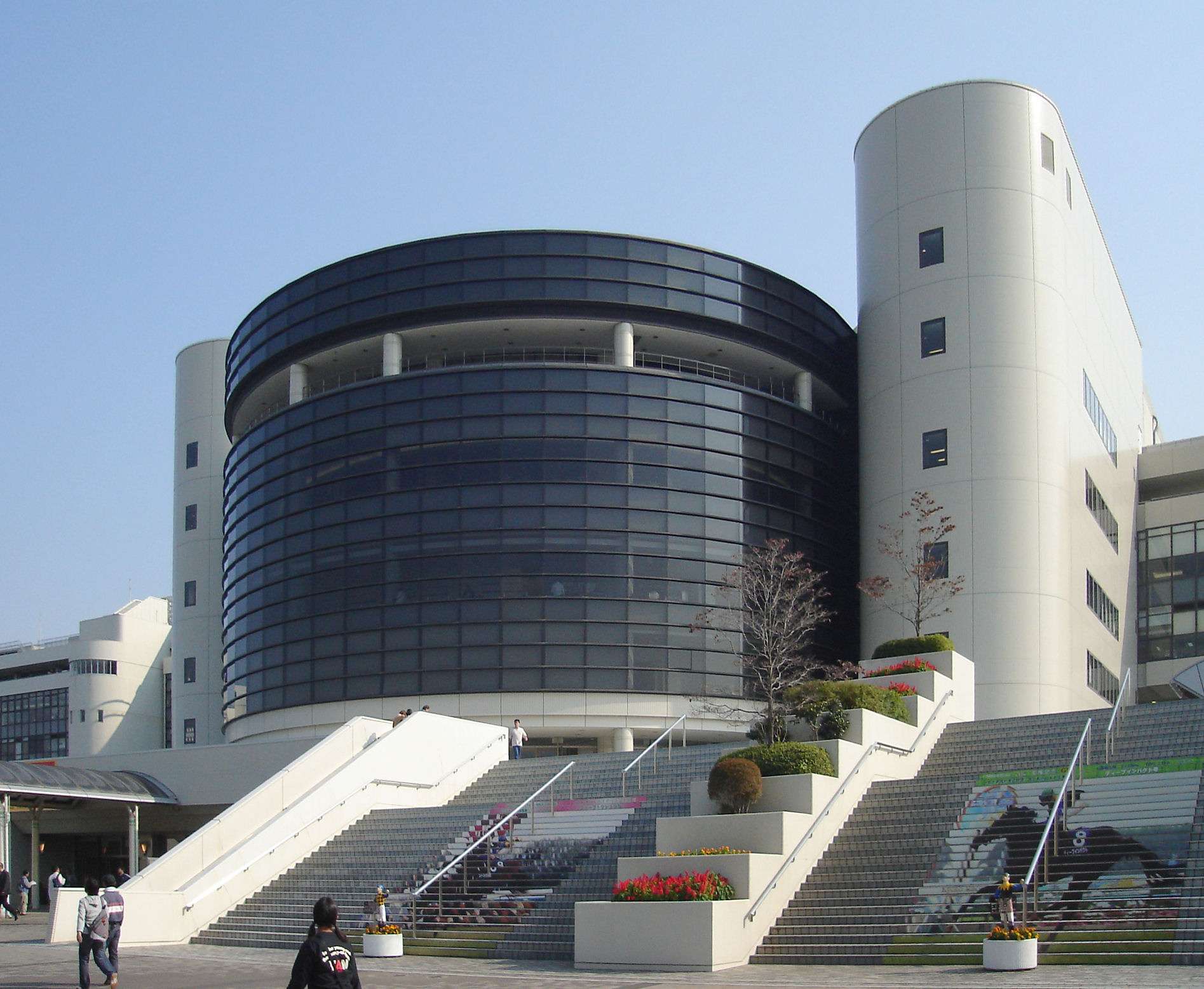
Kyoto Racecourse (京都競馬場 Kyōto-keibajō) is located in Fushimi-ku, Kyoto, Kyoto Prefecture, Japan. It is used for horse racing. It has a capacity of 120,000. It was built in 1999. Kyoto Race Course has two turf courses, a dirt course, and a jump course.
The turf's outer oval (外回り sotomawari) measures 1894m (1 1/8 miles + 274 feet), and the inner oval (内回り uchimawari) measures 1783m (1 1/16 miles + 240 feet). A chute permits races to be run on either oval at distances between 1400m and 1800m. Races can be run on the "A Course" rail setting (on the hedge), the "B Course" setting (rail out 4 meters), the "C Course" setting (rail out 7 meters) or the "D Course" setting (rail out 10 meters).
The dirt course measures 1608 meters (4 feet less than 1 mile), with a 1400m chute.
The Kyōto Kinen (京都記念 Kyōto Kinen?) is a Grade II race in Japan that is open to international horses. It is held mid February at Kyoto Racecourse in Kyoto, Japan.
The race was first run in 1942. It was not run from 1944 to 1947 due to World War II. Initially the race was run over 3,500 metres (about 2 miles or 1.5 furlongs) and the present race is run over 2,200 metres (about 11 furlongs). Kyōto Kinen has been rated as a Grade II race since 1984 and was opened for foreign trained horses at that time, although foreign horses have never run the race until recently.
It is a popular prep race for Tenno Sho (spring). Takeshiba O, Ten Point, Biwa Hayahide and T M Opera O are horses that won both the Kyōto Kinen and the Tenno Sho. Some horses run this race before going to Dubai. In 2007, Admire Moon won this race and the Dubai Duty Free.
Week 12 2021 Results...

Week 12 Scores...
Twilight Sparkle 76, Pinkie Pie 3
Rainbow Dash 38, Villanova 17
Applejack State 24, Montana State 17
Rarity 33, Fluttershy 27 (OT)
The Mystique of Nakayama Racecourse
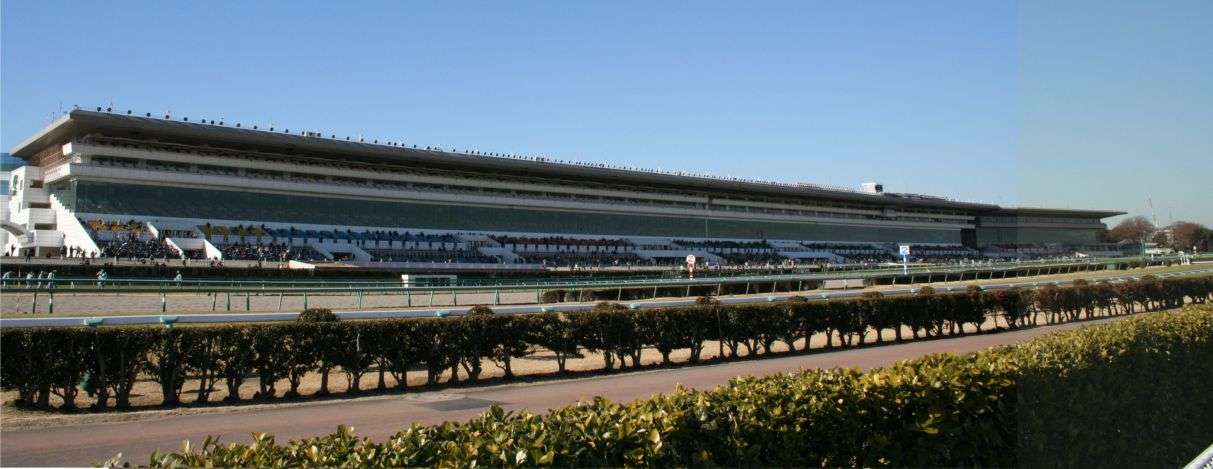
The Mystique of Nakayama Racecourse
By Hearst Schlitz III
The Ponyville Express
November 10, 2021
Nakayama Racecourse (中山競馬場 Nakayama-keibajō) is located in Funabashi, Chiba, Japan. It is used for horse racing. It has a capacity of 165,676. It was built in 1990. It has 15,944 seats. Nakayama Race Course has two grass courses, a dirt course, and a jump course.
The turf's outer oval (外回り sotomawari) measures 1840m (1 1/8 miles + 97 feet) with a 1600m and a 2200m chute, and the inner oval (内回り uchimawari) measures 1667m (1 mile + 189 feet) with a 1400m chute. Races can be run on the "A Course" rail setting (on the hedge), the "B Course" setting (rail out 3 meters), or the "C Course" setting (rail out 7 meters).
1000m, 1400m, 1800m, 2000m, 2500m and 3600m races run on the inner oval, while 1200m, 1600m, 2200m, 2600m and 4000m races run on the outer oval. 3200m races run on the outer oval first, then the inner oval. The dirt course measures 1493 meters (7/8 mile + 278 feet), with a 1200m chute.
The Arima Kinen (有馬記念) is a Grade I flat horse race in Japan open to Thoroughbreds which are three-years-old or above. It is run over a distance of 2,500 metres (approximately 1 mile and 4½ furlongs) at Nakayama Racecourse, and it takes place annually in late December. It is one of the two "All-Star" races in Japanese horse racing; the other is the Takarazuka Kinen in late June.
The event was first run in 1956, and it was initially titled the Nakayama Grand Prix (中山グランプリ). The following year it was renamed in memory of Yoriyasu Arima (1884–1957), the founder of the race. The distance was originally set at 2,600 metres, and it was shortened to the present length, 2,500 metres, in 1966.
The majority of the runners (10 out of 16) in the field are selected by a vote from racing fans, which must be a Japan Racing Association(JRA) horse. If at least one horse in top 10 decided not participating the race, the void will be filled with next available horse until 10 available runners are filled. The remainder of 6 (including National Association of Racing(NAR) and foreign-based horse) are determined by the amount of prize money won in.
Until 1999 the Arima Kinen was open to Japanese trained horses only. However, the Japan Racing Association introduced a new condition in 2000 which allowed for the participation of a foreign trained horse, if it had won that year's Japan Cup (though, no horse eligible has ended up participating this race). The Arima Kinen was classed as a Domestic Grade I until 2006, and it was then promoted to an International Grade I in 2007. Consequently, it is now possible for more foreign trained horses to compete in the race. The maximum number of these was set at four in 2007, and this increased to six for the 2008 running.
Week 11 2021 Results

Week 11 Scores...
Twilight Sparkle 63, Fluttershy 0
Applejack State 59, Cal Poly 6
Pinkie Pie 21, Rarity 17
Georgia Southern 26, Rainbow Dash 24
The Mystique of Hanshin Racecourse
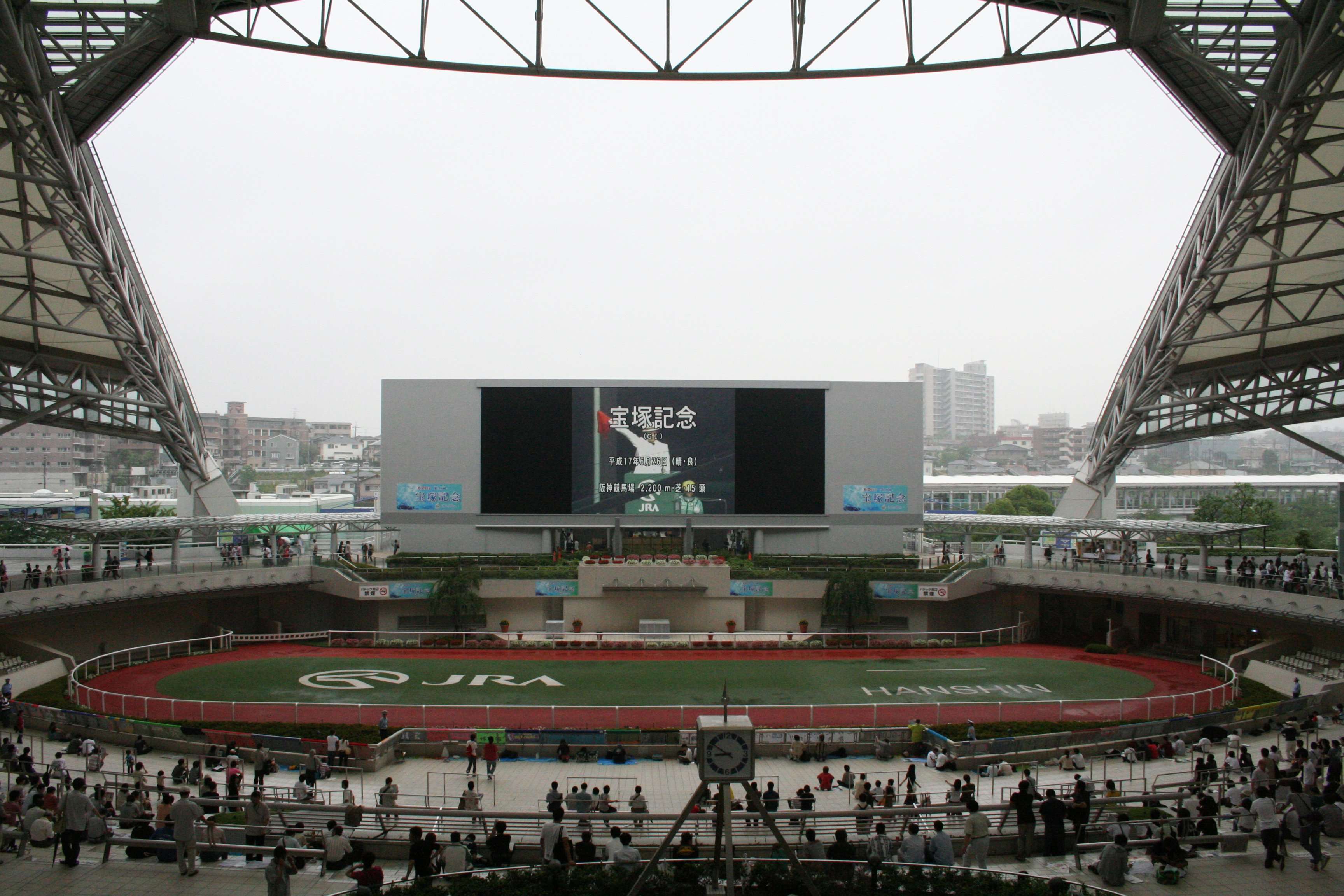
The Mystique of Hanshin Racecourse
By Hearst Schlitz III
The Ponyville Express
November 3, 2021
Hanshin Racecourse (阪神競馬場 Hanshin-keibajō?) is located in Takarazuka, Hyogo, Japan. It has a capacity of 139,000 and it is used for horse racing. The land was originally owned by Kawanishi Aircraft Company, which manufactured combat planes during World War II. After the WWII, GHQ ordered the company to stop manufacturing combat planes, which ended in closing the factory. In 1949, Keihanshin Keiba K.K. built the Hanshin Racecourse. The racecourse was transferred to Japan Racing Association in 1955. A major reconstruction was completed in 1991, and another in 2006.
Hanshin Racecourse has two turf courses, a dirt course, and a jump course. The turf's outer oval (外回り sotomawari?) measures 2089m (11⁄4 miles + 254 feet), and the inner oval (内回り uchimawari?) measures 1689m (1 mile + 261 feet). Two chutes allow races to be run at 1800m/1400m and 2600m/2200m, respectively. Races can be run on the "A Course" rail setting (on the hedge), or the "B Course" setting (rail out 4 meters). The dirt course measures 1518 meters (7/8 mile + 360 feet), with a 1400m chute.
The 2089m-long outer oval turf course was part of a major construction in 2006, and was a 400m-long extension. This would eventually remove two old chutes previously used, including a 1600m chute used for the currently-used 1689m-long inner oval course. The reconstruction (until the course was completely reconstructed) forced stakes races held in Hanshin during the second reconstruction period to be held in other racecourses, including Chukyo Racecourse and Kyoto Racecourse.
Hanshin Racecourse has hosted the Japan Cup Dirt since 2008; races prior to that was held in Tokyo Racecourse.
The Takarazuka Kinen (宝塚記念) is a Grade I flat horse race in Japan for three-year-old and above thoroughbreds run over a distance of 2,200 metres (approximately 1⅜ miles) at Hanshin Racecourse (阪神競馬場) in late June.
It is one of the two "All-Star" races in Japanese horse racing; the other is the Arima Kinen (the Grand Prix) in late December.
It was first run in 1960 with a distance of 1,800 metres. From 1961 to 1965 the race was run over 2,000 metres and since 1966 it has been run over its present distance.
The race is run on the turf and is named after the city of Takarazuka, Hyōgo, the location of Hanshin Racecourse, which is the venue of the race.
As with the Arima Kinen, the majority of the runners in the field are selected by a vote from racing fans, while the remainder are determined by the amount of prizemoney won.
Week 10 2021 Results

Week 10 Results...
Applejack State 41, Pinkie Pie 21
Rarity 43, North Dakota 34
Rainbow Dash 42, Fluttershy 35
The Mystique of Tokyo Racecourse
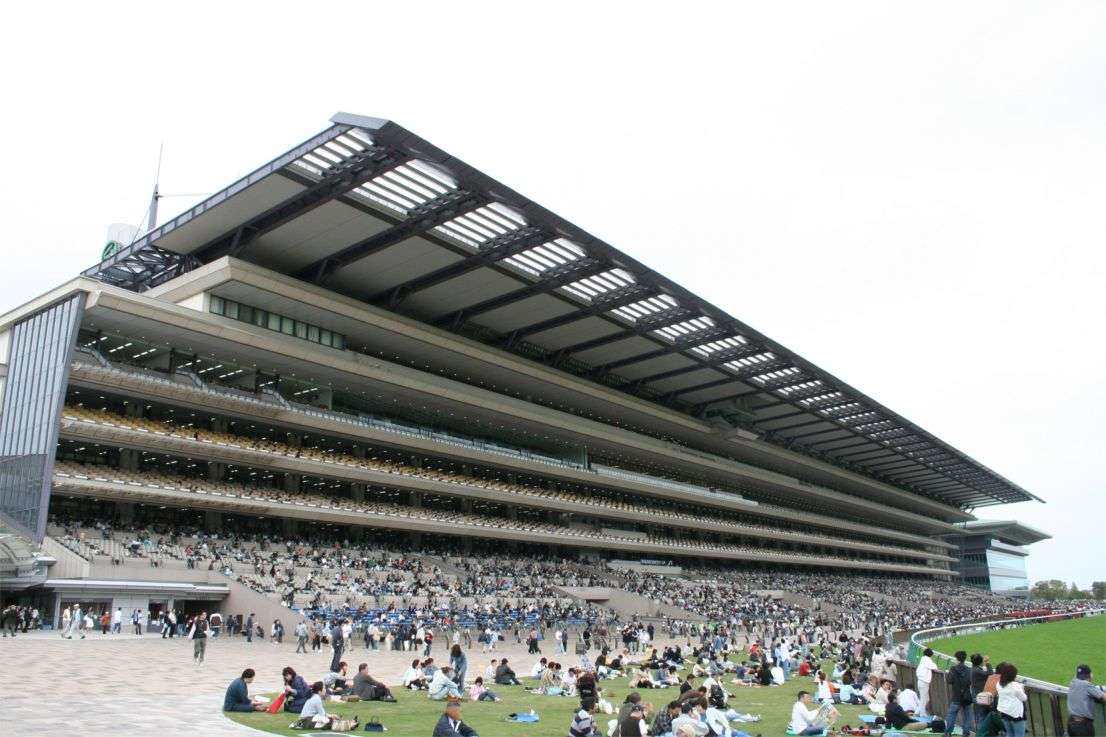
The Mystique of Tokyo Racecourse
By Hearst Schlitz III
The Ponyville Express
October 27, 2021
Tokyo Racecourse (東京競馬場 Tōkyō Keiba-jō?) is located in Fuchu, Tokyo, Japan. Built in 1933 for horse racing, it is considered the "racecourse of racecourses" in Japanese horseracing. It has a capacity of 223,000. Tokyo Racecourse hosts numerous G1 (Grade 1) races, including the Japan Cup, Tokyo Yushun (the Japanese Derby) and the Yasuda Kinen, a part of the Asian Mile Challenge.
Tokyo Race Course's grass course measures 2083m (1¼ miles + 234 feet) with two chutes (1800m and 2000m). Races can be run on the "A Course" rail setting (on the hedge), the "B Course" setting (rail out 3 meters), the "C Course" setting (rail out 6 meters), the "D Course" setting (rail out 9 meters) or the "E Course" setting (rail out 12 meters).
The dirt course measures 1899 meters (1⅛ mile + 290 feet), with a 1600m chute. The jump course measures 1675 meters (1 mile + 215 feet). There was a chute for 3200m races (used for the Tenno Sho Autumn races), but when the race was shortened to 2000m, the 3200m chute was useless and is not in use as of today.
The course was renovated in 2007 (started in 2000), adding the world's largest video screen and upgrading a grandstand, named the "Fuji View Stand", which in today is the main grandstand of the course. The "Memorial 60" grandstand was also added. The HD screen measured 218 feet (66 m) wide by only 37 feet (11 m) high at 8,066 square feet (749.4 m2). In 2009 Kauffman Stadium in Kansas City, Missouri took the world’s largest title with a 84-foot (26 m) by 104-foot (32 m) is 8,736-square-foot (811.6 m2) screen.
Week 9 2021 Results

Week 9 Scores...
Rarity 31, Wofford 21
Applejack State 31, Fluttershy 27
Rainbow Dash 34, Pinkie Pie 28
Applejack State stands tall with new fight song

Applejack State stands tall with new fight song
By Dan Druff
The Orchard
October 22, 2021
Applejack State has a new fight song, the result of a song contest that saw 600 entries placed through three stages. The winner: Ph.D student Marika Tachibana, who is set to complete her doctorate degree next spring pending approval of her dissertation. Her piece is entitled "We're the Knockers," and is based off a Ken Walther tune called "We're The Eagles," the fight song of the West Coast Eagles.
"Even though we got hammered against Boise State last week, it's never good to feel down after any poor result," said Tachibana. "You have to keep going, keep fighting, do whatever it takes to succeed and win. This song captures the moment we get a meaningful victory for ourselves and for our university.
"I used the West Coast Eagles theme song because it exudes the type of confidence you like to see from athletes of skill and character. And yes, we have a chapel that has victory bells that are run after every home win in all the sports we play. So it makes a whole lot more sense in terms of relevancy."

Marika Tachibana, the composer of Applejack State's fight song, "We're The Knockers."
---
Hey Knockers! Hey Knockers!
Hey Knockers! Hey Knockers!
We're bucking high!
We're bucking high!
We're bucking high!
We're bucking high!
In every city, and every town,
You'll see us, far and near.
The Apple Acres smiles again.
Our Applejack is here.
We're the Knockers,
The Appleknockers,
And we're here to show you why
We're a great team living the big dream.
We're the Knockers, we're bucking high!
We play our games with honor,
And we play them very well.
And now we got the Apple magic.
Someone ring the victory bells!
We're the Knockers,
The Appleknockers,
And we're here to show you why
We're a great team living the big dream.
We're the Knockers, we're bucking high!
So watch out all you ponies,
And be sure to take a seat.
Cause you'll get more
Than just our country charms.
We're gonna sweep you off your feet!
We're the Knockers,
The Appleknockers,
And we're here to show you why
We're a great team living the big dream.
We're the Knockers, we're bucking high!
We're the Knockers,
The Appleknockers,
And we're here to show you why
We're a great team living the big dream.
We're the Knockers, we're bucking high!
We're a great team living the big dream.
We're the Knockers, we're bucking high!
We're the Knockers, we're bucking high!
Rainbow Dash's new fight song 20% cooler

Rainbow Dash's new fight song 20% cooler
By Jerry Cross
The Daily Dash
October 21, 2021
It takes the minds of two siblings to come up with a song that unites a university in the sky. Mako and Matarou Mankanshoku, second-year master's students from Tokyo, Japan, came up with a fight song for the Rainbows that is sure to get fans amped up for the season. The song is simply named "Rainbow Dash."
"So now," said Matarou, "You have Rainbow Dash the pony, Rainbow Dash the university, and Rainbow Dash the fight song. It's a song that we penned over a week, inspired by this old tune called 'Row, Row, Row.' Mako told me to add a little chanting to it to get the crowd really into the spirit of the game.
"We've never written fight music before; in fact, we never had a song, period," said Mako. "Originally, we were going to call it 'Nobody Beats the Dash' but that was wildly inaccurate. We needed to be a bit realistic when writing this piece. It was fun putting it together and then winning the support of the students. Really good fun."
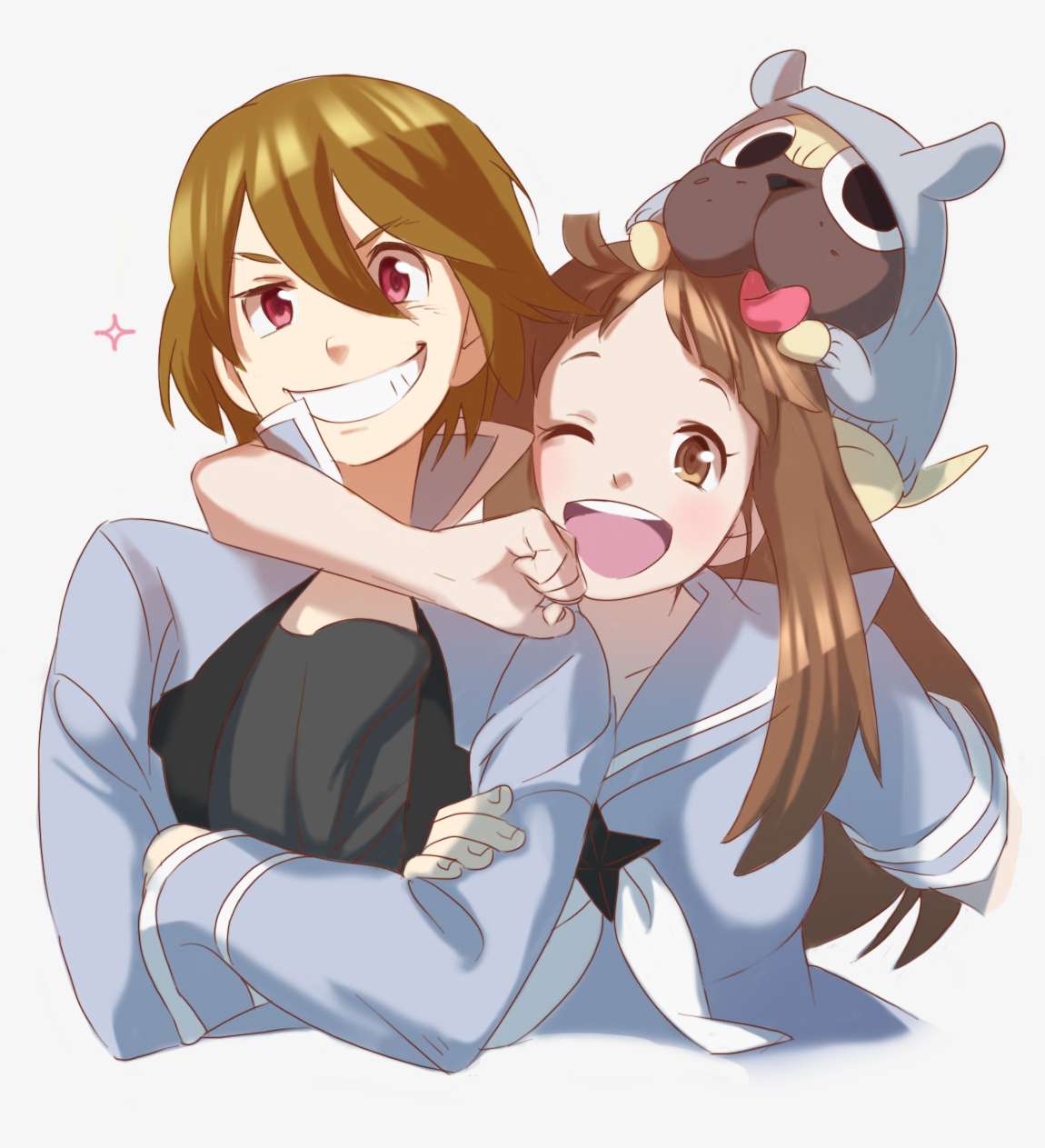
Matarou and Mako Mankanshoku, the songwriters for Rainbow Dash's fight song.
---
We are from Rainbow Dash,
(WE'RE RAINBOW DASH!)
A blaze of fury,
We're from Rainbow Dash.
(WE'RE RAINBOW DASH!)
In any battle you will see us with a grin,
And we'll go all in,
If we're behind, well, don't you mind,
We're gonna get the win
Because we're Rainbow Dash.
(WE'RE RAINBOW DASH!)
We'll never weaken till the game we play is won.
To the young and the old,
The brave and the bold,
We are from Rainbow (20 PERCENT!)
We are from Rainbow Dash!
Rarity keeps its Royal side up

Rarity keeps its Royal side up
By Roger Hanneberry
The Carousel
October 20, 2021
In spite of a tough year for the Rarity Royals, a fight song has been penned by Rarity College Associated Students (RariCAS) President Kim Hyuna, a junior fashion design major. The song is called "Keep Your Royal Side Up," and is based on the old tune "Keep Your Sunny Side Up."
"Optimism is a key part of the Rarity College of the Arts experience," said Ms. Kim at a ceremony and concert introducing the new fight song at the Tom Rock Playhouse. "So we have to be positive and weather the tough storm that may come to our teams because you can't win all the time, and you can't lose all the time.
"We make it very clear that being a student at Rarity is more important that being an athlete. We're not like Twilight Sparkle, where academics and athletics go hand in hand. We need to stress the importance of succeeding academically and bring fabulous in everything we do. That's the motto of this university: Be Fabulous In Everything You Do."
---
Keep your Royal side up, up
And earn the victory today.
Every battle and every game,
We're going to win for Rarity's name.
Keep your Royal side up, up,
And leave the doubters in fear.
Strive to be the best
And forget the rest.
Keep your Royal side up!
Song with swag for Pinkie Pie

Song with swag for Pinkie Pie
By Hanna Mirabelle
The Daily Party
October 19, 2021
Call it a song from having one too many drinks at the wheel. Call it a song with all frosting and no cake. Call it a song that has too much swag when in reality there is way too much fail. But, get to know it and call it the official fight song of the Pinkie Pie Major Trouble.
At the end of a big somewriting contest on the campus of Pinkie Pie University, junior astrophysics major Wong Wei composed "We Are From Pinkie Pie," based on the standard "Lily of Laguna." Over 400 submissions were placed in the contest and it was the founder who, allegedly, picked it out of a hat.
"This song is dedicated to our football team offensive coordinator, @TrojanMan," said Wong, who has a think Cantonese accent, as he arrived fresh off the boat at the age of 10. "I wanted to develop a song people can sing after a big win while having a drink because we love to imbibe after big wins. So, have fun, everyone!"
---
We are from Pinkie Pie.
We are the boys from Pinkie Pie.
We're the team that never lets you down.
We're the only team your party knows.
We've got your number,
And you're in trouble, right on the double,
Because you know that you've been playing
Against the famous Pinkie Pie!
A fight song for Fluttershy

A fight song for Fluttershy
By Rosita Hernandez Vega
The Daily Yay
October 18, 2021
At Fluttershy College, students were asked by the founder, Fluttershy, to compose the fight song for the university. The winner of the contest, which saw 300 entries submitted, was a sophomore history major named Adrian Huang of Houston, Tex. The song, "Good Ol' Fluttershy Forever," was based on a tune called "Goodbye Dolly Gray."
"I dedicated this song to our current offensive coordinator, Coach Travis Rountsaville, because he told us that he likes slapstick comedy and hilarious bite to musical garbage," said Huang while eating a dagwood with his mouth open. "No, seriously, it's an infectious song that the Spirit community will like. Just ask Collingwood."
"I like the tune, it's simple and fresh," said Fluttershy. "I sometimes hum the melody when I'm working in my office. I like the confidence in the lyrics, too. I think we call it a shot in the arm. Something."
---
Good Ol' Fluttershy forever,
We know how to play the game.
Hearts and hooves will stick together
To uphold the Spirit name.
See the barrackers a-shouting,
Pointing up to the sky.
Oh, the game will be a cakewalk
For the Good Ol' Fluttershy. Yay!
Twilight Sparkle introduces new fight song

Twilight Sparkle introduces new fight song
By Robert "Hots" Thurston
The Daily Twilight
October 17, 2021
A songwriting contest took place last week on the campus of Twilight Sparkle University and the winner of the contest is a freshman physics major named Ken Hanesaki, from Los Angeles, Calif. The song is called "The Twilight To Win" and is based off the fight song of the Port Adelaide Football Club.
"I wanted to bring an energetic feeling to Twilie because the founder is a nice lady and a pony I can ride on without any clothes off," said Hanesaki, who is known for running every day through the streets on Ponyville at night to stay fit. "I like this university and the feeling you get when being a part of the magic.
"So I hope everyone gets behind this song because it really captures the youthful essence of this place."
---
We want the Twilight to win,
Twilight to rule,
Come on, the Unicorn aggression!
Cause Twilight Sparkle is here
And this is our year.
Winning games is part of our tradition.
We'll never stop, stop, stop
Till we're top, top, top.
There's history here in the making.
We want the Twilight to win.
We'll never give in
Till the victory's ours for the taking.
TWILIE!
We got a force that's so strong
That can't go wrong
With the Ponyville crowd,
So shout it out loud.
All our heroes are those
Who earn the right
To don the purple,
Heliotrope and white.
And the world's supporters
Standing tall,
Summer, winter, spring and fall...
They want the Twilight to win,
Twilight to rule,
Come on, the Unicorn aggression!
Cause Twilight Sparkle is here
And this is our year.
Winning games is part of our tradition.
We'll never stop, stop, stop
Till we're top, top, top.
There's history here in the making.
We want the Twilight to win.
We'll never give in
Till the victory's ours for the taking.
TWILIE!
Applejack "outbucked" by Boise State, 67-52
.png)
Applejack "outbucked" by Boise State, 67-52
By Ed Lee
The Orchard
October 16, 2021
Despite Robbie Ingram's heroics, Big Macintosh's Applejack State Appleknockers were outdone by the ground attack of the Boise State Broncos in their 67-52 defeat at Applejack Stadium in Apple Acres, Calif. Ingram passed for 292 yards and five touchdowns while rushing for 126 more yards.
Halfback Richard Beverly ran for 238 yards and two touchdowns, tight end James O'Connor caught 11 passes for 91 yards and three scores and wide receiver David Banks caught four passes for 55 yards and two touchdowns. Strong safety Eric Williams led the Knockers in tackling with 17 tackles and an interception while free safety Jonathan Holley added 10 hits.
"We got outbucked, y'all," said Coach Macintosh after the game. "I don't kno how else I can put it to y'all. This wasn't a good game from us defensively. We may in some trouble next week, now don't you know."
Applejack State improve to 1-4 and return to action next week at home against the Fluttershy Spirit.
The Mystique of Ellerslie Racecourse
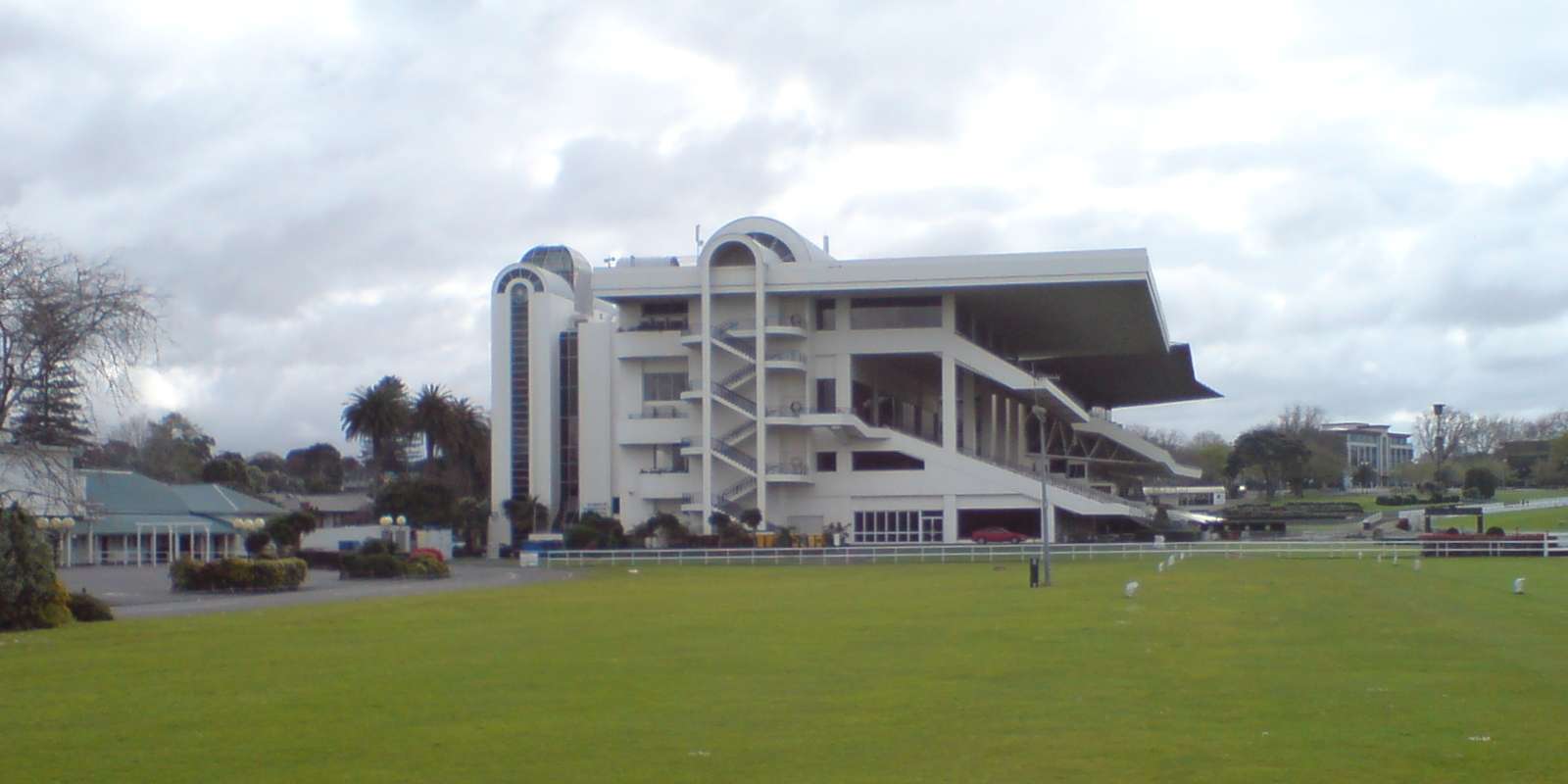
The Mystique of Ellerslie Racecourse
By Hearst Schlitz III
The Ponyville Express
October 13, 2021
Ellerslie Racecourse is the main racecourse in Ellerslie, Auckland, New Zealand for thoroughbred racehorses. It is an undulating, grass circuit of approximately 1,900 m. The first race meeting was held at Ellerslie on 25 May 1874. At this time the racecourse was a considerable distance outside the city and it took Aucklanders up to several hours to get to the course by carriage. Many took the trains, though with the demand created by the event, as late as in 1910 they often had to travel in open cattle trucks because there were not enough normal coaches available for the demand of the extra services.
Ellerslie Racecourse was the location of the first automatic totalisator, designed by George Julius and installed in 1913. During the 20th century, Ellerslie Racecourse provided plants for Kingseat Hospital.
Champion racehorses to have raced at Ellerslie include Kindergarten, Balmerino, Bonecrusher, Uncle Remus, Japan Cup winner Horlicks, Il Tempo, Mr Tiz, Sunline (who was buried at the racecourse in 2009) and Jimmy Choux.
Ellerslie is home to two of New Zealand's major racing carnivals - the Summer Carnival and Auckland Cup Week. The Summer Carnival is run in the Christmas-New Year period with Boxing Day and New Year's Day formerly being home to the New Zealand Derby and Auckland Cup respectively, but these were moved to the new Auckland Cup Week in March 2006.
Stteplechasing at Ellerslie features the well-known "hill", a part of the course not used for flat racing. The major steeplechase at Ellerslie, the Great Northern Steeplechase, requires the horses to climb this hill 3 times in the 6400m event.
Week 7 2021 Results

Week 7 Results...
Twilight Sparkle 107, Air Force 17
Hawai'i 31, Applejack State 21
The Mystique of Horseracing in the Philippines, Part IV

The Mystique of Horseracing in the Philippines, Part IV
By Hearst Schlitz III
The Ponyville Express
October 6, 2021
In 2000, Executive Order No. 296 was signed by Philippine President Joseph Estrada to integrate the "personnel, programs and resources" of the National Stud Farm with other units and agencies managed by the Department of Agriculture. With this Order the Stud Book Division became the Stud Book and Animal Registry Division (SBARD), placing it under the control of the Bureau and Animal Industry (BAI). With the same Order, the Stud Book Division became the Stud Book Authority of the Philippines (SBAP).
In 2001, three Japanese-owned thoroughbred horses bred in the Philippines were exported to Japan, and were proven to be of horseracing quality "at par" with racehorses bred in other countries. In 2003, the Philippine National Stud Book Division was transferred from the Department of Agriculture to the Philippine Racing Commission, a bureau that was directly under the control of the Office of the President of the Philippines. The executive order was approved by Philippine President Gloria Macapagal-Arroyo. Also in 2003, the offices and racetrack of the MJCI were transferred to Carmona, Cavite at the San Lazaro Leisure Park (SLLP), a 77-hectare (190-acre) complex.
In 2004, after the start of the transfer of personnel, programs, and other resources of the Stud Book Division to the Philippine Racing Commission, The Philippine Stud Book Volume III was published, recording the breeding activities of 676 Thoroughbred mares from 1999 until 2002. Also in 2004, the first MARHO Founders Cup (also known as the "Pearl Stakes") horseracing festival was started by the founders of MARHO to celebrate the organization's foundation.
In 2005, Benhur C. Abalos became the leader of MARHO. Abalos and other members of MARHO took legal and police action against the activities of illegal bookmakers. The campaign would continue through 2006. Also in 2005, monitoring and eradication program for Equine Infectious Anemia (EIA) was made mandatory by PHILRACOM for all racehorses. Identification "passports" were also issued for all racehorses, including pedigrees, vaccination, laboratory test results, and other required information. Also during 2005 the MJCI developed a website featuring horseraces, tips, and results.
In 2006, MJCI became the first horseracing club in the Philippines to provide horseracing information through text messaging, a program known as the Karera Info sa Text, with plans to introduce betting via text message. Also in 2006, the Blood Typing and Parentage Validation Program for racehorses was replaced by a DNA technology program. A microchip numbering program was additionally adopted in 2007 for foals that were born in 2005. Also in 2006, because of the International Agreement on Breeding, Racing and Wagering (IABRW), the Philippines became a signatory to significant articles published by International Federation of Horseracing Authorities (IFHA) in relation to racehorse breeding. On December 8, 2006, the San Lazaro Leisure Park Turf Club of the MJCI became the first "racino" in Asia. The casino gaming area, named as the Casino Filipino at San Lazaro, was on the top floor of the SLLP Turf Club.
In February 2013, the Metro Manila Turf Club (also known as Metro Turf) opened, being the third world-class horseracing facility in the country. It operates at Malvar, Batangas.
Week 6 2021 Results

Week 6 Results...
Twilight Sparkle 135, Navy 21
Rarity 45, Florida 21
Washington 38, Rainbow Dash 34
Pinkie Pie 37, Mississippi State 27
North Carolina 34, Fluttershy 17
The Mystique of Horseracing in the Philippines, Part III

The Mystique of Horseracing in the Philippines, Part III
By Hearst Schlitz III
The Ponyville Express
September 29, 2021
In 1971, the MJC's Gran Copa trophy was lost in a fire. Today only a replica exists at the San Lazaro Leisure Park (SLLP). Despite of the loss, the Gran Copa de Manila horseracing event continued during the 1970s. With San Miguel Beer as the sponsor, two divisions of the Gran Copa de Manila were being held. The event also became known as the San Miguel Beer Copa or SMB Copa due to SMB sponsorship. In 1972, both the MJCI and the PRC were given franchises to "construct, operate and maintain their own racetracks for a period of 25 years". This was made into law by the Philippine Congress with Republic Acts No. 6631 and 6632.
In 1974, the twelfth Asian Racing Conference was held in the Philippines. Also during 1974, the Philippine Racing Commission (PHILRACOM) was created through Presidential Decree No. 420. PHILRACOM was given the responsibility to promote and administer the development of horseracing in the Philippines as "a sport and a source of revenue and employment". The PHILRACOM was established through the efforts of the Metropolitan Association of Race Horse Owners (MARHO), an organization formed when a shortage in the supply of horsefeed, such as oats, occurred. On March 20, 1974, the two entities sharing authority over horseracing were the Philippine Racing Commission and the Games and Amusements Board (GAB). As of June 3, 1977, through Presidential Decree No. 1157, the rate of taxes from horseracing (together with Jai-alai) was equivalent to 10% of an individual's Sweepstakes winnings or dividends corresponding to each winning ticket, after deducting the cost of the ticket.
In 1988, Executive Order No. 194 reduced the level of horseracing taxes. This lowering of tax rates happened through the efforts of MARHO, which was headed at the time by Federico "Eric" Moreno, a Philippine justice. During the early part of the 1990s, computer technology was employed for the day-to-day operations of the MJCI.
In 1992, a program to monitor Equine Infectious Anemia (EIA) was initiated by the National Stud Farm for all breeding stock. The tests adopted were the Coggins Test (also known as the Agar Gel Immuno-Diffusion (AGID) Test). In 1995, the Blood Typing and Parentage Validation Program was also adopted by the NSF for horses that were under contract with the Royal Western India Turf Club, Inc. (RWITC). In 1996, the Stud Book Authority of the Philippines (SBAP, also known as The Philippine Stud Book Volume I) was recognized by the International Stud Book Committee (ISBC). The Stud Book Authority of the Philippines recorded the "breeding activities of more than 500 Thoroughbred mares" (including those that were breeding in the Philippines) from 1994.
In 1996, the yearly MARHO Breeders Cup (MBC) program was established by MARHO leader, horseowner, and horsebreeder Aristeo "Putch" Puyat, together with Leonardo "Sandy" Javier, Jr., Puyat co-leader at MARHO. The program gives recognition and trophies to deserving horse owners, horse breeders, jockeys, and trainers, focused only on "high-quality stock" of Philippine-bred horses. In November and December 1997 an outbreak of equine influenza affected horseracing in the Philippines.
In 1999, the second volume of the Stud Book Authority of the Philippines known as The Philippine Stud Book Volume II was published, a record of the "breeding activities of more than 600 Thoroughbred mares" in the country from 1995 through 1998, including stallions which have produced offspring from pregnant (in-foal) mares imported into the Philippines during that time. Live horseraces at the MJCI were later broadcast on a dedicated cable television channel.
Week 5 2021 Results

Week 5 Results...
Twilight Sparkle 154, Missouri 42
Air Force 45, Pinkie Pie 21
Rainbow Dash 37, UL Monroe 24
Rarity 42, Arizona 28
BYU 44, Fluttershy 28
The Mystique of Horseracing in the Philippines, Part II

The Mystique of Horseracing in the Philippines, Part II
By Hearst Schlitz III
The Ponyville Express
September 22, 2021
After the Spanish-American war, the Philippines became a territory of the United States, because Spain opted to make peace with the United States. resulting in the 1898 Treaty of Paris (1898), where Spain negotiated on terms favorable to the US, allowing temporary American control of Cuba, and ceding indefinite colonial authority over Puerto Rico, Guam and the Philippine islands – as island possessions – to the US.
Horseracing at the Santa Mesa Hippodrome (also known as the Santa Mesa Oval) resumed in the Philippines in 1899. In 1900, the MJC was moved to San Lazaro in the district of Santa Cruz, Tayuman in Manila (the MJC is currently known as the San Lazaro Leisure & Business Park). The site measured 16 hectares (40 acres) and had a grandstand and a 1200-meter or six-furlong track. In 1901, during the term of American Governor-General William Howard Taft, the "democratization of horseracing" allowed "people from all social strata" to go to the hippodrome during horseracing days. Betting was introduced and permitted in 1903. In 1930, foreign breeds such as Arabian horses were imported by the Bureau of Agriculture. Also in 1930, the Bureau of Animal Industry was established, and continued to import Arabian horses. During this time, there were two other racetracks that tried to compete with the MJC: the Pasay Country Club (between Harrison Street and Vito Cruz Street) and another in Cebu. Neither lasted long.
In 1935, the Philippine Legislature signed Act No. 4130. This law authorized the holding of Sweepstakes Races by the Philippine Charity Sweepstakes, which replaced the National Charity Sweepstakes on October 30, 1934. The MJC became incorporated in 1937, becoming the Manila Jockey Club, Inc. (MJCI), transforming itself from a social association into a business.
In 1937, the Philippine Racing Club was established in Makati and became a competitor to the MJCI. Established by Filipino and American businessmen, the Philippine Racing Club (PRC) was also organized for the purpose of using horse breeds of "superior quality" for horseracing. In 1939, Commonwealth Act No. 156 was enforced. This Commonwealth Act was later amended through Commonwealth Act No. 156. The purpose of Commonwealth Act No. 156 was to include the Philippine Tuberculosis Society Inc. in the holding of yearly National Grand Derby Races, with the goal of promoting the breeding of local or native horses in the Philippines. At the beginning of the 1940s, when Rafael Roces became the president of MJCI, he introduced two types of bet on the horseracing menu: the "daily double" bet and the llave ("key") bet. The daily double bet is unique to the Philippines, and is not offered in other countries. The daily double bet is still popular today.
While under American possession, the Philippines became involved in World War II (1939–1945). Although the war began in 1939, it only started to affect the Philippines directly in 1941 when the United States entered. MJCI had to close for the duration of the war. From 1941, the Gran Copa trophy of the MJCI was kept by Dr. Salustiano Herrera, an officer of the club. The invading Japanese armed forces used the premises of the MJCI as their barracks. After World War II, the MJCI's buildings were converted by the Americans into a facility with "a hospital and a garrison". Herrera returned the Gran Copa trophy to MJCI and it was installed in the Trophy Room.
After the Second World War, the Republic of the Philippines was officially recognized as an independent nation on July 4, 1946. In March 1946, the horseracing facilities of MJCI were returned to its members. It took two months of reconstruction before the racetrack became open to the public. In 1948, the Commission on Races was created by Republic Act. No. 309, a law signed by former Philippine President Elpidio Quirino to regulate horseracing.
In 1951, President Quirino further signed Executive Order No. 392, a presidential order that resulted in the creation of the Games and Amusements Board, which was given the responsibility to regulate public gaming. The Board was also tasked with enforcing gambling laws. In 1957, after the MJCI was registered at the Manila Stock Exchange, off-track betting stations were established in Manila, Pampanga, Cavite, and other provinces with the aim of eradicating illegal bookmakers. Horseraces at the club were broadcast on television Channel 11.
In 1964, the Philippines became the host of the Fourth Asian Racing Conference. In 1965, the National Stud Farm was created, through former Philippine President Ferdinand Marcos's approval of Republic Act No. 4618. There were three main purposes for the National Stud Farm. First was to prevent the illegal importation of foreign breeds of horses. Second was to improve the existing breeds of Philippine horses. Third was to perform other functions related to horseracing. In 1969, regulation of the "distribution of gross wages sales on horseracing" was started through the approval of Republic Act No. 6115. During the 1960s, the Philippines became a member of the Asian Racing Conference (ARC), which focused on how further to improve horseracing in the region.
Subscribe to:
Comments (Atom)