
Showing posts with label 2020. Show all posts
Showing posts with label 2020. Show all posts
Thursday, March 20, 2014

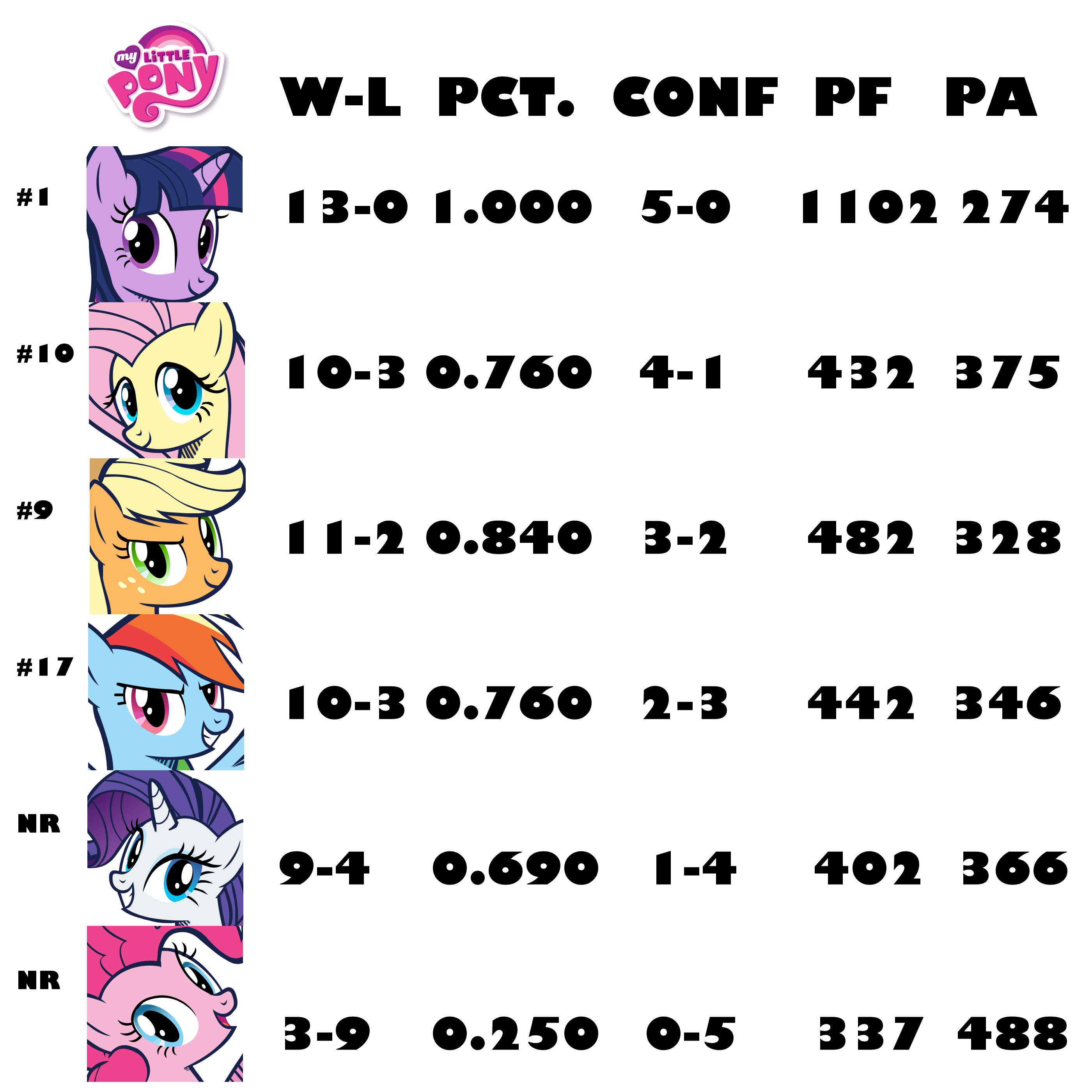
Bowl Season 2020 Results
Bowl Season, 2020 Scores...
BCS National Championship Game
Twilight Sparkle 87, USC 24
San Diego County Credit Union Poinsettia Bowl
Applejack State 42, Toledo 28
Royal Purple Las Vegas Bowl
Fluttershy 35, Fresno State 13
Sheraton Hawai'i Bowl
Rainbow Dash 41, Middle Tennessee State 20
Armed Forces Bowl
Rarity 42, North Texas 17
BCS National Championship Game
Twilight Sparkle 87, USC 24
San Diego County Credit Union Poinsettia Bowl
Applejack State 42, Toledo 28
Royal Purple Las Vegas Bowl
Fluttershy 35, Fresno State 13
Sheraton Hawai'i Bowl
Rainbow Dash 41, Middle Tennessee State 20
Armed Forces Bowl
Rarity 42, North Texas 17
The Mystique of Lingfield Park Racecourse
![[IMG]](https://lh3.googleusercontent.com/blogger_img_proxy/AEn0k_swdFKWQL7wBIf_2B-Ih26XZBTuftA-mJcoQ2mCnHFtEt4MoS1_q59KgALjiHmkjCru6KkLtEMhc8RETIoMUp6HvJivS2_BsxjEmHhENOOt=s0-d)
The Mystique of Lingfield Park Racecourse
By Arthur Heineman
The Daily Twilight
December 9, 2020
Lingfield Park Racecourse (commonly referred to as Lingfield) is a horse racing course at Lingfield in Surrey, United Kingdom. It is owned by the ARC Racing and Leisure Group, formerly Arena Leisure Plc.
Lingfield is best known as a winter all-weather flat-racing course; the track is Polytrack, rather than the usual turf found in the UK. There are only three other all weather courses in the UK, the others being at Southwell, Kempton and Wolverhampton with another all weather track, Great Leighs, currently moth-balled. Lingfield stages flat racing on turf in the summer and National Hunt races are also run on turf.
The racecourse is located in a 450-acre (1.8 km2) estate and was opened in 1890 by the Prince of Wales (later Edward VII), who also agreed to let Lingfield incorporate the Prince of Wales feathers into its official heading. The course initially held jumps racing only, but in 1894 the Jockey Club granted permission for flat racing to be held. Racing has been held continuously ever since, with the only exception being during World War II when the War Office requisitioned the course. Ladbrokes sold the course in 1982 and the new owners installed flood defences on the estate to alleviate the flooding that had become a major problem in the years immediately after the war. A golf course was developed and this opened in June 1987. Arena Leisure purchased the course in 1991, and in 2001 made the decision to replace the Equitrack all weather surface with Polytrack, opening in November 2001. Other recent developments have been the re-laying of the back straight on the turf course in 2002/2003 and the construction of a £5.5 million grandstand in 2004. In early 2009 the course had another record broken as Matsunosuke became the highest rated horse to win on the all weather surface rated 112 or 117 by Racing Post rating. This was dubbed as the greatest all weather horse of all time in the UK.
The racecourse is featured in the 1954 film The Rainbow Jacket. Lingfield Railway Station adjoins the course, served by trains from London to East Grinstead via Oxted.
Week 15 and 16 2020 Results
Week 15 Scores...
Twilight Sparkle 76, Rarity 13
Applejack State 34, Rainbow Dash 21
Fluttershy 37, Pinkie Pie 31
Week 16 Scores...
No Scores
Twilight Sparkle 76, Rarity 13
Applejack State 34, Rainbow Dash 21
Fluttershy 37, Pinkie Pie 31
Week 16 Scores...
No Scores
The Mystique of Chepstow Racecourse
![[IMG]](https://lh3.googleusercontent.com/blogger_img_proxy/AEn0k_uAB3W-T8Wn6uy2rkD1mM3gH7MXpHCtsYW7BVvQKa48nh9Fmbl8qy3WElpbGVLsQa-43m1u27wnlzp-W3W84-t6OiEzZq91fEwwfuAoLaM=s0-d)
The Mystique of Chepstow Racecourse
By Arthur Heineman
The Daily Twilight
December 2, 2020
Chepstow Racecourse is a thoroughbred horse racing course located just north of the town of Chepstow in Monmouthshire, Wales, near the southern end of the Wye Valley and close to the border with England.
The track is a roughly oval circuit of just under 2 miles (3,200 m). It is a left-handed undulating course, used for both flat and jump racing. The finishing straight is about 5 furlongs (3,300 ft; 1,000 m) in length, with five fences on the chase course to be jumped. There is also a straight mile course. There are 28 fixtures in the 2012 calendar year. It is one of three racecourses in Wales, the others being at Bangor-on-Dee and at Ffos Las. It is also used as a venue for numerous other indoor and outdoor events, such as weddings and conferences.
Several places in South Wales had race meetings in the late nineteenth century and there had been racing at St Arvans, very close to the present course, between 1892 and 1914. In 1925 a group of ten South Wales gentry and businessmen, that included Courtenay Morgan, 1st Viscount Tredegar who was also Lord-Lieutenant of Monmouthshire, and Lord Queenborough; formed a company to purchase Piercefield House, and lay out a new racecourse in its estate. Despite struggling to raise enough cash, the racecourse was opened on 6 August 1926. The first race was a two-year-old seller won by Lord Harewood's colt Conca D'Oro, the 7-4 favourite. The two day flat race meeting had good prize money and was termed "The Welsh Goodwood".
The course nearly had to close down immediately after the first meeting and survived only thanks to a large bank loan guaranteed by the directors. Unforeseen extra costs in laying it out meant that it struggled financially for the first ten years of its existence and yet more contributions were needed from the directors. The first jump racing took place in March 1927. Since then the course has been used for flat racing in the summer and jumping in the winter. To begin with, the flat racing was more prestigious, with the Welsh Derby, Oaks and St Leger being run for good prize money. In 1933, at a two day meeting, the multiple champion jockey Gordon Richards won eleven consecutive races at Chepstow – all six races on the first day and the first five races on the next, before being beaten in a close finish in the final race of the meeting.
During the Second World War, the entire site became designated as RAF Chepstow, an operational outpost of RAF St. Athan, No.32 MU. Equipped with only a grass runway in the centre of the course, additional aircraft accommodation for bombers was created at Oakgrove on the opposite side of the road, accessed by stopping the traffic to allow the aircraft to cross. Types stationed on the course during the war included:
- Boulton Paul Defiant
- Hawker Hurricane
- Armstrong Whitworth Whitley
- Vickers Wellington
- Bristol Blenheim
The opening of the Severn Bridge and the completion of the M4 motorway made the course more accessible to English racegoers. The Clay family, which had bought Piercefield House in 1861, were involved with the management course since its formation. Listed on the AIM stock market as a plc in the late 1990s, Sir Stanley Clarke built up an 80% stake in the company, and then reversed his existing Northern Racing racecourse holdings into the shell. Clarke took over as executive chairman of the Racecourse Company in 2000, resigning in 2003 before his death the following year from cancer.
Week 14 2020 Results
Week 14 Scores...
Twilight Sparkle 55, Applejack State 10
Rainbow Dash 33, Rarity 21
Pinkie Pie 37, Richmond 6
Fluttershy 51, Montana 24
Twilight Sparkle 55, Applejack State 10
Rainbow Dash 33, Rarity 21
Pinkie Pie 37, Richmond 6
Fluttershy 51, Montana 24
The Mystique of Doncaster Racecourse
![[IMG]](https://lh3.googleusercontent.com/blogger_img_proxy/AEn0k_tGMrcxK7S3nxQ8sPoJY55Uf-Fb74H-DTcMhSrhg5x1dwrWhYgnzT8n_Ozz8JmPsyzalKZaCLBdgmRphn6TuUg4HfkgxtZfROguhHqQYC6H=s0-d)
The Mystique of Doncaster Racecourse
By Arthur Heineman
The Daily Twilight
November 25, 2020
Doncaster Racecourse (also known as the Town Moor course) is a racecourse in Doncaster, South Yorkshire, England. It hosts two of Great Britain's 31 Group 1 flat races, the St Leger Stakes and the Racing Post Trophy.
Doncaster is one of the oldest (and in terms of physical capacity – largest) established centres for horse racing in Britain, with records of regular race meetings going back to the 16th Century. In 1600 the corporation tried to put an end to the races because of the number of ruffians they attracted, but by 1614 it acknowledged failure and instead marked out a racecourse.
Doncaster is home to two of the world's oldest horse races. The earliest important race in Doncaster's history was the Doncaster Gold Cup, first run over Cantley Common in 1766. The Doncaster Cup is the oldest continuing regulated horse race in the world. Together with the 2 miles (3,200 m) Goodwood Cup and 2 1⁄2 miles (4,000 m) Ascot Gold Cup, the Doncaster Cup is part of Britain's Stayers' Triple Crown for horses capable of running longer distances.
Ten years later the Racecourse moved to its present location and in 1776 Colonel Anthony St. Leger founded a race in which five horses ran. This race has remained in existence and become the world's oldest classic horse race. During the first world war the racecourse was used for military purposes and substitute races were run at Newmarket from 1915 to 1918.
Doncaster has the distinction of both starting and ending the flat season on turf. Every September, Doncaster hosts the prestigious four-day Ladbrokes St. Leger Festival, which is acclaimed as the premier sporting occasion of the Autumn calendar. Doncaster has also taken over events whose traditional homes have closed, such as the Lincoln Cup in 1965.
More history was made at Doncaster in 1992 when it staged the first ever Sunday meeting on a British racecourse. A crowd of 23,000 turned up despite there being no betting. The racecourse is more than just a racecourse. It regularly hosts conventions such as the Tattoo Festival and business meetings such as Doncaster Dynamites BNI every Wednesday. The current membership committee of that BNI chapter comprises local Doncaster business people Michael Reeder, Ailsa Watson, James Criddle, Mark Appleyard, Jason Cole, Ian Smith and Andrew Isaacs.
Today the St. Leger Stakes remains the world's oldest Classic Horse Race and features in the Horse Racing calendar as the fifth and final Classic of the British Flat racing season. This pride of place every September on the famous Town Moor course.
Doncaster is a left-handed, pear-shaped track of around 1 mile 7½ furlongs which is mostly flat. There are courses for Flat racing and National Hunt racing. The racecourse is easily accessible by road, railway and air.
Week 13 2020 Results
Week 13 Scores...
Twilight Sparkle 77, Rainbow Dash 7
Pinkie Pie 28, South Dakota State 19
Fluttershy 31, Bucknell 21
Applejack State 48, Rarity 17
Twilight Sparkle 77, Rainbow Dash 7
Pinkie Pie 28, South Dakota State 19
Fluttershy 31, Bucknell 21
Applejack State 48, Rarity 17
The Mystique of Epsom Downs Racecourse
![[IMG]](https://lh3.googleusercontent.com/blogger_img_proxy/AEn0k_tdxW91ZYCfxvP4u8fDA5w8Ho6GyCvZQ7RsMPm00i9ua6jKuhE2p-FNuQ_7CpsYvXQ3P3iHp3vXin7lognFcw6mCH7aFiyBo3QGkwdI3v4=s0-d)
The Mystique of Epsom Downs Racecourse
By Lay Cheong
The Daily Dash
November 18, 2020
120,000 capacity Epsom Downs is a Grade 1 racecourse near Epsom, Surrey, England. The "downs" referred to in the name are part of the North Downs. The course is best known for hosting the Epsom Derby, the United Kingdom's premier thoroughbred horse race for three-year-old colts and fillies, over a mile and a half (2400m). It also hosts the Epsom Oaks for three-year-old fillies and the Coronation Cup for all ages over the same distance.
The first recorded race was held on the Downs in 1661, although a local burial list of 1625 refers to "William Stanley who in running the race fell from his horse and brake his neck" so it is likely that racing was established much earlier than that. Epsom is referenced in the diary of Samuel Pepys in 1663 and Charles II is said to have been a racegoer there. By 1684, Epsom had a clerk of the course and from 1730 was hosting twice yearly race meetings.
In the summer of 1779 Edward Smith-Stanley, 12th Earl of Derby organised a race for himself and his friends to race their three-year-old fillies. He named it the Oaks after his estate. The race became so successful that the following year a new race was added for colts and fillies - the Epsom Derby. In 1784 the course was extended to its current distance of a mile and a half and Tattenham Corner was introduced. Henry Dorling, step-father to cookery writer Mrs Beeton, was a Clerk of the Course at Epsom, appointed in 1840.
In 1913 the suffragette Emily Davison threw herself in front of King George V's horse Anmer, bringing him down. Davison was badly injured and died four days later. In 1952 the racecourse was featured extensively in the film Derby Day set around the 1952 Epsom Derby.
In 2009 the racecourse opened the new Duchess's Stand. It has a capacity of 11,000 and has a 960m² (10 000 sq ft) hall. It can be used for banqueting, conferences and exhibitions. The estimated cost of the new stand, which was built by Willmott Dixon, was £23.5 million.
On 4 June 2011, in their first public outing since returning from their Seychelles honeymoon, Prince William, Duke of Cambridge, and his wife, Catherine, Duchess of Cambridge (along with The Queen, William's brother, Prince Harry, and Catherine's parents, Michael and Carole Middleton) attended the 2011 Epsom Derby at the track.
The racecourse is between Epsom, Tadworth, and Langley Vale. As it is in a public area, people can watch the Derby free, and this meant that the Derby used to be the most attended sporting event of the year. It presents a stern challenge for inexperienced horses and a true test of stamina for those that might previously have contested the 2,000 Guineas Stakes over a mile (1600m).
Epsom Downs houses the third largest racehorse training facility in the country. The facility is managed by the Epsom trainers society. There are 11 trainers who use the facility, including Simon Dow and Laura Mongan (the only female trainer at Epsom). The area is served by the Epsom Downs railway line as well as Tattenham Corner railway station which is where the British monarch alights from the British Royal Train on race days.
Week 12 2020 Results
Week 12 Scores...
Twilight Sparkle 70, Pinkie Pie 0
Fluttershy 49, Rarity 24
Applejack State 51, Georgia Southern 21
Rainbow Dash 31, North Dakota State 24
Twilight Sparkle 70, Pinkie Pie 0
Fluttershy 49, Rarity 24
Applejack State 51, Georgia Southern 21
Rainbow Dash 31, North Dakota State 24
The Mystique of Ayr Racecourse
![[IMG]](https://lh3.googleusercontent.com/blogger_img_proxy/AEn0k_svlT0OuqaHoJD4HboiT-BE_DVjENVK5K8aHJTeR9BWcs-YbKHWL7-Sp-LnuXBGHWHfkxpPHeVEYC_afvOA7po0DFPHkO2ccr5ZFefy2A=s0-d)
The Mystique of Ayr Racecourse
By Lay Cheong
The Daily Dash
November 11, 2020
Ayr Racecourse at Whitletts Road, Ayr, Scotland, was opened in 1907. There are courses for flat and for National Hunt racing. The course stages the highest-quality racing and most prestigious races run in Scotland in both codes of the sport.
Horse racing in Ayr dates back to 1576, but the first official meeting did not take place until 1771 at a racecourse situated in the Seafield area of the town. This first racecourse was a mile oval with sharp bends. In the early days, racing was supported by the local landed gentry and members of the Caledonian Hunt. Important figures in the course's history have included the Earl of Eglinton, Sir James Boswell and the Duke of Portland.
In 1824, Ayr's most important race meeting, the Western Meeting, was established and by 1838 it offered £2000 in prize money and the most valuable two year old race of the season in Britain. The meeting's feature race, the Ayr Gold Cup, became a handicap race in 1855 and is now the richest sprint handicap in Europe.
Due to the small size of the track and limitations on the size of the paddock, a new site for the racecourse was eventually sought and in 1907, the course was moved to its current location in the Craigie area of town. After extensive research into other British courses, the new course layout was based on that of Newbury, with the exception that Ayr's straight course is six furlongs rather than a mile. The former racecourse is now playing fields, known as the Old Racecourse, and part of Seafield golf course. Local road names Racecourse Road and Racecourse View also reflect this history.
A jumps track was added in 1950 and in 1966 the Scottish Grand National was transferred to the track after Bogside Racecourse was closed down. It is now regarded as the premier racecourse in Scotland.
Ayr has been voted Best Racecourse in Scotland and the North East nineteen times by the Racegoers Club, including the last nine years in a row. It has also won the Neil Wyatt Ground Staff Award for the Best Dual Purpose Course twice - in 1996 and 2011. This award is voted on by representatives of the National Trainers Federation and Professional Jockeys' Association to recognise the achievements of racecourse groundstaff. In 2012, Ayr was nominated in two categories in the Racecourse Association Showcase Awards - the Food and Beverage and Owners' Experience categories, winning the latter. It has been designated a four star visitor attraction by VisitScotland.
Week 11 2020 Results
Week 11 Scores...
Twilight Sparkle 63, Fluttershy 0
Rainbow Dah 43, Elon 7
Applejack State 38, Montana 22
Rarity 45, Pinkie Pie 20
Twilight Sparkle 63, Fluttershy 0
Rainbow Dah 43, Elon 7
Applejack State 38, Montana 22
Rarity 45, Pinkie Pie 20
Thursday, March 6, 2014
The Mystique of Laurel Park
![[IMG]](https://lh3.googleusercontent.com/blogger_img_proxy/AEn0k_tl_5oGEpMKM6c-EtY1l3pRNeCTLvF0uflbT2rwOXSHTt0XU0XTfJLmVJzS_8Dzly96UTYkhj35ADRWwwXTqaie5rbA0pcJnBB5ex7ZVKwb=s0-d)
The Mystique of Laurel Park
By Alfred Lee
The Orchard
November 4, 2020
Laurel Park is an American thoroughbred racetrack located just outside Laurel, Maryland which opened in 1911. The track is 1 1/8 miles in circumference. Its name was changed to "Laurel Race Course" for several decades until returning to the "Laurel Park" designation in 1994. Laurel Park Racecourse opened October 2, 1911 under the direction of the Laurel Four County Fair. In 1914, New York businessmen and prominent horsemen, Philip J. Dwyer and James Butler purchased the track and appointed Matt Winn as the general manager. In 1918 the field was used by Army Engineers as a training camp before deployment to France. In 1947, the Maryland Jockey Club, which owned Timonium and Pimlico, purchased Laurel Park from the Butler estate with the idea of shifting the Pimlico meeting to Laurel. After the Maryland General Assembly rejected the idea of replacing Pimlico with Laurel Park, the track was sold to Morris Schapiro who had his youngest son, John D. Schapiro as the track's new president. Laurel was sold to the Schapiros in 1950.
From 1950 to 1984, Laurel Park underwent a period of great change. The track was renamed Laurel Race Course and the Washington, D.C. International was introduced at 1½ miles on the turf. In 1953 Laurel opened a new clubhouse and turf club, and in 1957 the grandstand was remodeled. In an effort to improve conditions for the International, Laurel lengthened its turf course from seven furlongs to one mile in 1959; simultaneously, the main track was extended from one mile to one mile and one-eighth. Laurel remodeled its clubhouse and grandstand to accommodate winter racing in 1966, enclosing the track’s seating area with 30,000 square feet of half inch thick glass. Conversely, when Laurel was awarded the summer racing dates in 1982, the track installed an air conditioning system in the grandstand and clubhouse. In 1984, the 34-year Schapiro era ended with the sale of the track.
Laurel entered a new era in December 1984, when Frank J. De Francis and his partners, Robert and John “Tommy” Manfuso, purchased the racetrack from Schapiro. Laurel Park Racecourse was updated in 1985 with an innovative creation of the 'Sports Palace'. In August 1989, Frank DeFrancis died and his son, Joe DeFrancis who now serves as president of Laurel and Pimlico. In 1994 the track's name returned to "Laurel Park". Yet more improvements included those to the main entrance, Grandstand interior and backstretch barns.
In 1994, an effort to redevelop land occupied by Laurel Park and its adjacent properties was attempted to relocate the Washington Redskins Stadium at the crossroads of Whiskey Bottom Road and Brock Bridge Road. Citizens and clergy launched a successful effort that killed the proposal. A lack of sufficient parking space was a significant factor in the decision.
In 1999, at Laurel Park, the MJC broke ground on a new $1.85 million backstretch housing project, Laurel Commons, in cooperation with Laurel Quality of Life, Inc., the Enterprise Foundation, Inc. and the Ryan Family Foundation, Inc. In addition, Laurel Park, as part of a $16 million multi-year renovation plan, opened four premier Clubhouse areas: “Tycoons,” an upscale cigar and brandy bar with an excellent television presentation of racing and other sporting events; “Sunny Jim’s,” a simulcast theater with individual carrels, and food & beverage service; “Clocker’s Corner,” a casual simulcast theater and cafe in a convenient track-side location and the “Kelso Club,” a premier accommodation for VIP customers with concierge service. Magna Entertainment Corp. On July 15, 2002 The Maryland Jockey Club and Magna Entertainment Corp announced the creation of an alliance designed to raise the level of Maryland thoroughbred racing to new heights. and began another renovation of Laurel Park's track and facility in 2004 to early January 2005 widening both racing surfaces.
In 2013, following a failed attempt to introduce slot machine gambling, Laurel Park owners Stronach Group announced plans to use the Maryland Racetrack Facility Redevelopment Account to fund year-round racing, facility improvements and a tunnel under the adjacent B&O railroad tracks, connecting to a 1000-unit Transit Oriented Development called Laurel Park Station on the Howard County portion of the Racetrack property.
Week 10 2020 Results
Week 10 Scores...
Fluttershy 17, Rainbow Dash 14
Rarity 34, Portland State 28
Applejack State 37, Pinkie Pie 21
Fluttershy 17, Rainbow Dash 14
Rarity 34, Portland State 28
Applejack State 37, Pinkie Pie 21
The Mystique of Emerald Downs
![[IMG]](https://lh3.googleusercontent.com/blogger_img_proxy/AEn0k_v4DcOVSPW5d30RBzMrBqUgAzi3LyrRVK_CsKbd26HHnfKL3h6nXKOczEGbM9R39yViq7f6qsNDEB7umdqlnMpAq-2J-mpsEnF3bvuSHz7jzICpZI5ItD3RIUWLMdtUzIr2sVvfWkk7ToOsX3fypiu71CWeZ0MPbssTHGfoOKs6NSpqM2p6-XA9XIBM4JcSXmvvk9HT7GL2YcWVadwlkiwXMELzqUchkMIZ31936Wq3=s0-d)
The Mystique of Emerald Downs
By Alfred Lee
The Orchard
October 27, 2020
Emerald Downs is a thoroughbred racetrack in Auburn, Washington, located a half mile east of Highway 167. It is named after Seattle, the Emerald City. Emerald Downs first opened its doors to race fans on June 20, 1996, with the inaugural 100 day meet running through November 4. It replaced Longacres Racetrack, which closed in September 1992 after sixty seasons of racing. Following the closure of Longacres, racing was not held in Western Washington from 1993–1995. However, Thoroughbred racing continued at Yakima Meadows and Playfair Race Course in Spokane during this time. Emerald Downs is a Limited Partnership, with a group of investors led by Track President Ron Crockett. In 2002, the land where Emerald Downs is situated was purchased by the Muckleshoot Indian Tribe for roughly $70 Million.
The Emerald Downs track is a one mile (1.6 km) oval in the shadow of Mount Rainier. The track surface itself is made of geo-textile fabric, washed rock, course sand, and one-component track material. However, there is no turf course. The tote board is located in the center of the oval track.
The Emerald Downs infield is designed as a storm system that is sized to accommodate all storm runoff for the entire southern portion of the track property, including all rooftop surfaces as well as parking lots and the racetrack surface. Before releasing any water, Emerald Downs tests for turbidity and PH levels. Samples are also sent to a laboratory for further testing of dissolved oxygen, ammonia and fecal coliform levels. Finally, the water is released into Mill Creek at an engineered rate of discharge in order to help prevent flooding downstream from the track. Much of the infield is under water during the fall and winter, creating a home for ducks, geese, rabbits, and other small wildlife.
The Emerald Downs Grandstand is a modern racetrack facility designed by EwingCole. There is general admission seating on track level, including a grassy park area with free children's activities on weekends (weather permitting). Outside on the third floor are box and reserved seats in the grandstand, as well as box and reserved seats on the fifth floor indoor clubhouse. Pari-mutuel windows are located on each floor to place wagers. There are eight food stands and six beverage services throughout the facility. There is also the Rainer Restaurant on the fifth floor, with reservations generally accepted two weeks in advance. The state-of-the-art facility and in-house catering at Emerald Downs lends itself to hosting a variety of events year-round. The Triple Crown Suites on the 6th floor and the large banquet space on the 4th floor are just a couple of venues available for group events.
The track hosts Live Thoroughbred racing from mid April through the end of September. Races are run Friday through Sunday and holidays the majority of the season. The track conducts several large ungraded stakes and many overnight handicaps and stakes. There are an average of 8 races on week nights, and 10 races per race weekend. In addition to live racing, the track offers simulcast wagering year round. The first Quarter Horse race in track history was held in 2010. In 2011, Emerald Downs added a major Quarter Horse stakes, the $60,000 Bank of America Emerald Championship Challenge Stakes run on Labor Day weekend.
Emerald Downs biggest race is the Longacres Mile Handicap, a Grade III event. The race was announced in June 1935 so Longacres founder Joe Gottstein could have a signature one mile (1.6 km) race. He felt the mile was an overlooked distance, neither a sprint nor an endurance run. In order to attract racers and attention, the purse was set at $10,000, instantly the largest staked one mile (1.6 km) race in the country (and it would remain so for more than 40 years).
As soon as the announcement was made, the first running of the race had 20 entrants; 16 actually started. The stakes attracted the owners of a New Orleans horse named Biff, grandson of Man o' War, who had just won $5000 in Chicago. Biff had the attention of everyone for weeks before the event and no owners would run their horses in preliminary races with him. Biff was first out of the gate but was stalked by Coldwater, a 20-1 longshot that wasn't regarded well. Near the end of the mile Biff was showing clear strain and Coldwater overtook him to win.
In 2008, locally owned and bred Wasserman took the Longacres Mile closing fast to win in a photo finish over horses shipped in to run the race. The 75th Longacres Mile was run on August 22, 2010. It was won by the betting favorite, Noosa Beach. Ridden by Ricky Frazier and trained by Doris Harwood for owner Jeff Harwood, the winner paid $5.60, $3.80 and $3.00. Jersey Town finished second, followed by the 2009 Mile champion, Assessment.
The 2011 Longacres Mile featured a showdown between defending champion Noosa Beach and multiple graded stakes-winning millionaire Awesome Gem. Awesome Gem took the lead near the wire, defeating Noosa Beach by 1 1/2 lengths. It was his 9th win in 46 career starts, boosing his earnings to over $2.6 Million. In 2012, jockey Mario Gutierrez became the first rider to sweep the Kentucky Derby and Longacres Mile in the same year, guiding I'll Have Another to wins in the Kentucky Derby and Preakness Stakes, and then taking the Mile aboard Canadian shipper Taylor Said.
Week 9 2020 Results
Week 9 Scores...
Rarity 45, Rhode Island 17
Fluttershy 34, Applejack State 31
Rainbow Dash 34, Pinkie Pie 24
Rarity 45, Rhode Island 17
Fluttershy 34, Applejack State 31
Rainbow Dash 34, Pinkie Pie 24
The Mystique of Meydan Racecourse
![[IMG]](https://lh3.googleusercontent.com/blogger_img_proxy/AEn0k_udxQ-ThICnGNPHTmoZwps5hkrkPH3uufYqAvuIXBLMREHnCXTL0M1fW4AUw1QoJjfIx6z_zfNdS3FYnvM0Qtfqo5PRugnNnuRVhNb7tT8I=s0-d)
The Mystique of Meydan Racecourse
By Alfred Lee
The Orchard
October 20, 2020
60,000 capacity Meydan Racecourse is a horse racing facility located in Dubai, United Arab Emirates. It opened on March 27, 2010, replacing Nad Al Sheba Racecourse which formerly occupied the same site. It is able to accommodate over 60,000 spectators in a 1 mile long grandstand. When not used for races it will serve as a business and conference integrated facility. A horse racing museum and gallery are also planned. The development also includes an 9-hole golf course. The 7.5 million sq. m Meydan Racecourse includes Meydan Marina, The Meydan — the world's first 5-star trackside hotel with 285 rooms, 2 race tracks and the Grandstand, which comprises a hotel, restaurants, a racing museum and 72 corporate suites for entertaining throughout the year. It has a 2,400 metre left-handed turf race track and a left-handed 8.75-furlong (1,750 metres) Tapeta synthetic dirt course. It operates from November through March and features the Winter Racing Challenge, Dubai International Racing Carnival and the Dubai World Cup Night. The Dubai World Cup is the world's richest race day with over US$26.25 million in prize money.
The Racecourse district occupies 67 million square feet (620 ha), the overall Meydan City development however is 200 million square feet (1,900 ha). It is divided into four sub-districts: Meydan Racecourse, Meydan Metropolis, Meydan Horizons, and Meydan Godolphin Parks. Meydan is closely affiliated with Mohammed bin Rashid Al Maktoum; UAE Vice President and Prime Minister and Ruler of Dubai.
The Dubai World Cup (Arabic:كأس دبي العالمي) is a Thoroughbred horse race held annually since 1996 and contested at the Meydan Racecourse (Arabic:ميدان) which in Arabic suggests a place where people congregate and compete, a sort of meeting point in the Emirate of Dubai, United Arab Emirates. The race is operated through the Emirates Racing Authority (ERA) whose Chairman is Sheikh Mansour bin Zayed Al Nahyan, Minister of Presidential Affairs of the United Arab Emirates. It offers nine races, consisting of eight Thoroughbred contests and one Purebred Arabian contest.
The Dubai World Cup, the final race of Dubai World Cup night, was created in 1996 by Sheikh Mohammed bin Rashid Al Maktoum, Vice President and Prime Minister of the UAE and Ruler of Dubai who owns Darley Stud & Godolphin Racing, one of the world's leading Thoroughbred breeding and racing operations.
Annually held on the last Saturday in March, the Dubai World Cup is part of the Dubai World Cup Night of races, and has carried a purse of USD ten million since 2010, making it the world's richest horse race. It is a Group 1 flat race on an all-weather surface known as Tapeta for Northern Hemisphere Thoroughbred four-year-olds & up and for Southern Hemisphere Thoroughbred three-year-olds & up run over a distance of 2,000 metres (about 10 furlongs) in late March.
The race's first winner was the future United States Hall of Fame Thoroughbred Cigar, owned by Allen E. Paulson. A plaque honoring that horse hangs outside the barn of Bill Mott at Belmont Park.
In 2006 the Dubai World Cup was broadcast live on TVG Network and HRTV and taped later for showing on ABC. It was the first time that the race was shown on national TV in the United States. In 2010, the Dubai World Cup was first held at the new Meydan Racecourse on March 27.
Week 8 2020 Results
Week 8 Scores...
Rainbow Dash 45, LSU 38
Fluttershy 43, Ole Miss 33
Pinkie Pie 61, Georgia State 48
Wednesday, March 5, 2014
The Mystique of Arlington Park
![[IMG]](https://lh3.googleusercontent.com/blogger_img_proxy/AEn0k_sTzYIYbVqHZLA5sz97qUzS6jIsHqEWtnltgOA5Fzd3uZTNtO-v4nojGziVMI-Xmbu7b7Cuv7fwcGWeGt0Oo0amEeJ_oSSSBS32-8Q0N60glwIeH9HUmf3lljeQzDbIaPDp9Nw842mfNiVZzqUIV_Wdu_-Qig=s0-d)
The Mystique of Arlington Park
By James Loy
The Carousel
October 13, 2020
Arlington International Racecourse is a horse race track in the Chicago suburb of Arlington Heights, Illinois. Horse racing in the Chicago region has been a popular sport since the early days of the city in the 1830s, and at one time Chicago had more horse racing tracks (six) than any other major metropolitan area. Arlington International was the site of the first thoroughbred race with a million-dollar purse in 1981. It is located near the Illinois Route 53 freeway.
Arlington International Racecourse was founded as Arlington Park by California businessman Harry D. "Curly" Brown who would later serve as president of Oriental Park Racetrack in Havana, Cuba. The track officially opened in 1927 to 20,000 spectators. Jockey Joe Bollero, who later became a successful trainer, rode Luxembourg to victory in the first race ever run at Arlington.
Benjamin F. Lindheimer acquired control of Arlington Park in 1940 and owned it until his death in 1960. Long involved with the business, adopted daughter Marjorie Lindheimer Everett then took over management of the racetrack. Widely respected Hall of Fame trainer Jimmy Jones of Calumet Farms was quoted by Sports Illustrated as saying that Lindheimer "was the savior of Chicago racing" and that "Arlington Park became the finest track in the world—certainly the finest I've ever been on." Benjamin Lindheimer is well remembered as the person who promoted the 1955 match race broadcast by CBS Television in which Preakness and Belmont Stakes winner Nashua defeated Kentucky Derby winner, Swaps.
Arlington was the first track to install a public-address system and employed the pioneering race caller Clem McCarthy to describe the action. It added the first electric totalisator which allowed a credible tote board and decreased time between races, in 1933. In 1936 it added a photo finish camera. It introduced the first electric starting gate in 1940, the largest closed circuit TV system in all of sports in 1967 and the introduction of trifecta wagering in 1971.
In 1981 Arlington was the home of the world's first million dollar thoroughbred race: The Arlington Million. The result of that race is immortalized in bronze at the top of the paddock at Arlington, where a statue of jockey Bill Shoemaker riding John Henry to a thrilling come-from-behind victory over 40-1 long shot The Bart celebrates Thoroughbred racing's inaugural million dollar race. Arlington entered a new era when Richard L. Duchossois led an Illinois investment group to purchase the track from its former owners and made a pledge to continue presenting championship racing. That was tested on July 31, 1985, when a small fire spread quickly out of control and completely destroyed the grandstand and clubhouse.
Unsure of the future of Arlington, the meet was moved to Hawthorne Race Course. Yet it was announced that the Arlington Million would still be held at Arlington International. On August 25, 1985 they did just that by using temporary bleachers. The track fully reopened in 1989. It briefly used the name "Arlington International Racecourse" before reverting to the old name. Arlington reverted to using Arlington International Racecourse starting in 2013.
In 2000, Arlington reopened after a two-year shutdown. In September of that year, Churchill Downs Incorporated completed its purchase of the track. Arlington hosted the 2002 Breeders' Cup World Thoroughbred Championships at their track.
On May 14, 2010, Lee DeWyze, a citizen of Mount Prospect, Illinois and a contestant on American Idol, performed a concert for approximately 41,000 fans. A year later, on May 14, 2011, Haley Reinhart, of Wheeling, Illinois, also made the top 3 on American Idol. She, like DeWyze, had a hometown concert at the track for nearly 30,000 of her own fans and supporters.
The track has a one mile and one-eighth dirt oval and a one mile turf oval. The track is capable of seating at least 50,000 with extension. There is stabling on the backstretch for over 2,000 horses. Arlington replaced its dirt course with a synthetic track prior to the opening of the 2007 season.
Week 7 2020 Results
Week 7 Scores...
Twilight Sparkle 95, LSU 24
Rainbow Dash 55, Tulane 16
Rarity 28, Arizona State 16
Alabama 38, Fluttershy 21
Applejack State 47, Air Force 24
Subscribe to:
Posts (Atom)